Hindu Naming Ceremony in America: Namakaranam
Namakaranam, the Hindu naming ceremony: how families in America pick a name by birth star, hold the ritual at home and bring in relatives from far away.
· 4 min read
In short
Namakaranam is the Hindu naming ceremony, traditionally held around the eleventh or twelfth day after birth, when the name is whispered into the baby's ear.
Many families choose a name beginning with a syllable linked to the baby's birth star, or nakshatra.
In America it can be held at home, at a temple or online with grandparents joining.
A Hindu naming ceremony, namakaranam, is the small ritual in which a baby's name is spoken aloud for the first time, traditionally whispered into the right ear. The first one I attended in America was in a friend's living room in suburban Ohio. His mother bent over the baby, cupped her hand around his tiny ear and said the name softly, three times. On the iPad propped against the flower vase, three grandparents in three time zones, Chennai, Singapore and London, began to cry at exactly the same moment. Nobody had planned that part. It remains the most moving minute of family life I have witnessed through a screen.
What is namakaranam?
Namakaranam, literally "the making of a name", is one of the sixteen samskaras, the rites of passage that mark a Hindu life from conception to death. It traditionally takes place around the eleventh or twelfth day after birth, once the period of rest and seclusion after delivery has ended, though families have always adjusted it to circumstance.
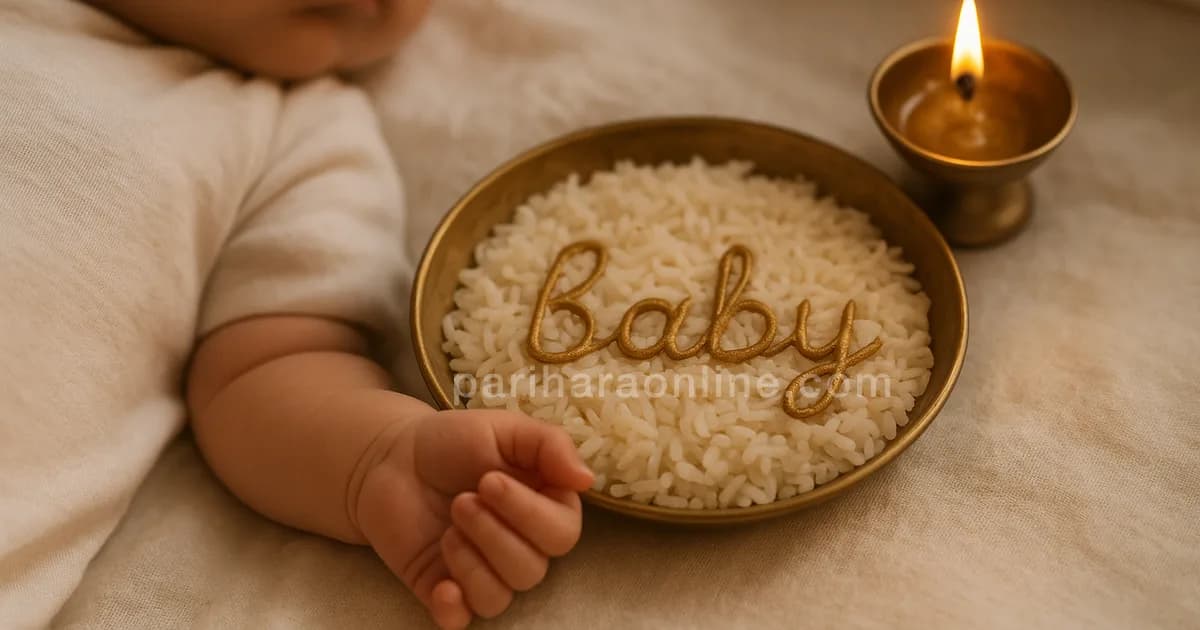
The core of the rite is intimate. The father, or a grandparent, whispers the chosen name into the baby's right ear, often with a blessing for a long and good life. A priest may perform a short puja, beginning with Ganesha and a sankalpam, the spoken statement of intention; the idea is explained in what is sankalpam. Rice is spread on a plate and the name is written in it, sometimes with a gold ring. Then the name is said aloud to the room, and the baby becomes, officially, someone.
How do you choose a baby name by birth star?
Many families choose a baby name by nakshatra, the birth star in which the Moon sat at the moment of birth. In Jyotish, each of the twenty-seven nakshatras is divided into four quarters, and each quarter is linked to a starting syllable. A baby born under Ashwini, for instance, might get a name beginning with Chu, Che, Cho or La, depending on the quarter. An astrologer or panchangam gives you the syllable; the family then finds a name that begins with it.
Other families lean on the family deity, naming a boy after Murugan or Venkateswara, or a girl after the Goddess of the home temple. Some keep a "star name" for rituals and give a separate everyday name.
Here in the US there is a third consideration, and it is not frivolous. A name will be read aloud by teachers, typed into forms and shortened by friends. Many parents quietly test a name at the school gate in their imagination. There is no shame in choosing a name that honours the birth star and also survives a roll call. The Tirukkural says a mother's joy on hearing her son called wise is greater than her joy on the day she gave birth. A name is, in the end, for other people to say well.
Holding a Hindu naming ceremony at home in the US
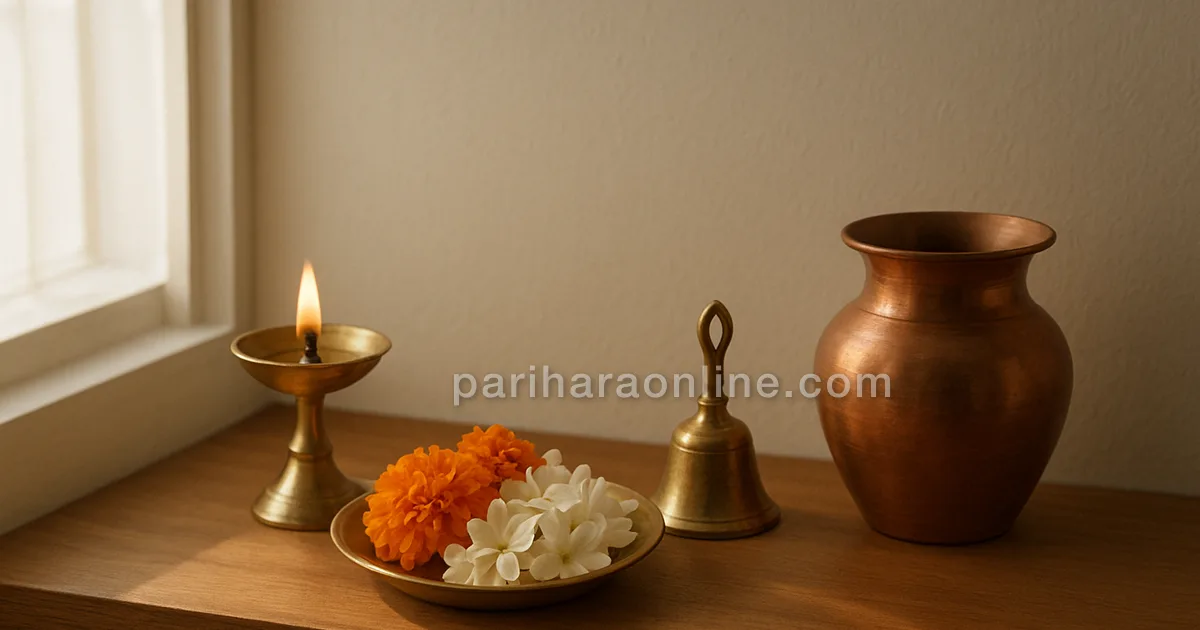
A naming ceremony for a baby at home needs very little. A clean corner, a lamp, a picture of the family deity, a plate of rice, flowers and a sweet. The setup is much like any puja at home, step by step.
A few practical notes for a namakaran ceremony in the USA:
- Priest at home or online. Many temples will send a priest to your home, and many priests now conduct the ceremony over video while an elder at home follows instructions.
- Time zones. Choose a time that is humane for the grandparents. Morning in the US is often evening in India, which suits a lamp-lit puja on their side.
- Flexibility after hospital stays. If the birth was difficult or the baby spent time in hospital, it is entirely in keeping with tradition to wait. The eleventh day is a custom, not a deadline.
- Keep it short. Newborns have limited patience. Twenty minutes is plenty.
Families who have recently moved may already know the rhythm from a housewarming; Griha Pravesh puja steps and blessing a new home abroad cover a similar small, home-scaled ceremony.
One small thing to carry into the week
Before the ceremony, or even long after it, write the name on a card. Beneath it, write what the name means and the story of how you chose it: the star, the grandmother, the argument that settled it. Put the card away for your child to find one day. The whisper is gone in a second. The card will keep.
Questions people ask
When is the Hindu naming ceremony done?
Tradition places namakaranam on the eleventh or twelfth day after birth, after the initial period of rest for mother and baby. Many families, especially abroad, hold it later, at one month, three months or whenever relatives can gather. Family custom and the advice of a priest or astrologer usually decide the day and time.
How do I choose a baby name based on nakshatra?
Each of the twenty-seven nakshatras, or birth stars, is divided into four parts, each linked to a syllable. An astrologer calculates the baby's nakshatra from the time and place of birth, then suggests the starting syllables. Families pick a name beginning with one of them, sometimes keeping it as a second or pet name alongside an everyday name.
Can we do a namakaran ceremony at home in the USA?
Yes. Many families invite a temple priest home or join one online. You need a clean space, a lamp, flowers, a plate of rice and a picture of the family deity. The father or an elder whispers the name in the baby's right ear, writes it in rice, and relatives bless the child, often joining by video.
What does the father whisper in the baby's ear?
In the classic form, the father or an elder leans close to the baby's right ear and says the chosen name, sometimes with a short blessing or mantra for a long, healthy and good life. Some families whisper the name three times. It is a tender moment that marks the child's welcome into the family and community.
Enjoying this?
To get more Namakaranam posts like this, subscribe for free.
Written by
The Sunday column: festivals and rituals meeting ordinary weeks
Manikandan writes the Sunday column, where festivals and rituals meet commutes, hospital corridors and video calls with parents far away. Each piece closes with one small thing to carry into the week ahead.