Makar Sankranti Meaning: Sun, Sesame and Winter
Makar Sankranti meaning for body and mind: the sun's turn north, why sesame and jaggery are eaten in winter, kites, early baths, and one practice to try.
· 4 min read
In short
Makar Sankranti marks the sun entering Makara, or Capricorn, around mid-January, beginning Uttarayana, the sun's northward journey, traditionally an auspicious turn.
Sesame and jaggery are eaten because they are warming winter foods, and sharing them is a gesture of speaking sweetly to one another.
Sankranti is one of the few Hindu festivals set by the sun rather than the moon, and it arrives exactly when the body is most tired of winter. The Makar Sankranti meaning is in the name: sankranti is the sun's passage from one zodiac sign to the next, and Makara is Capricorn. Around mid-January, the sun moves into Makara and begins what the tradition calls Uttarayana, its northward journey. The days lengthen. People eat sesame and jaggery, bathe early, fly kites and get out into the light. It is a festival your body can feel.
Makar Sankranti meaning
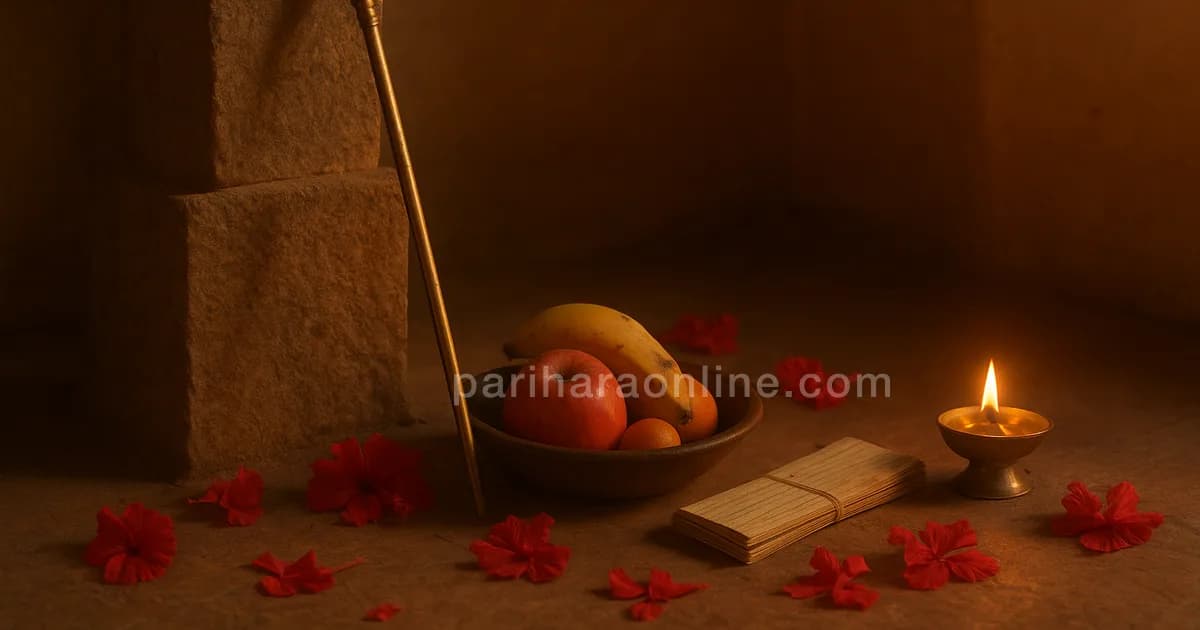
There are twelve sankrantis in a year, one for each sign. Makar Sankranti is the one everyone celebrates because it marks a turn. In the traditional reckoning, from this day the sun is seen as travelling northward, the six months called Uttarayana, the sun's northern course, considered especially auspicious. The Mahabharata tells of the warrior Bhishma, wounded on a bed of arrows, choosing to wait until Uttarayana began before he let himself die. That is how much weight the turn carried.
Because it follows the sun, the date barely moves, unlike moon-based festivals. The same day is celebrated across India under different names: Pongal in Tamil Nadu, told in why Pongal is celebrated; Lohri the night before in Punjab; Uttarayan in Gujarat; Magh Bihu in Assam; Sankranti in Karnataka and Andhra. Different foods, same sun.
Why sesame, jaggery and an early bath?
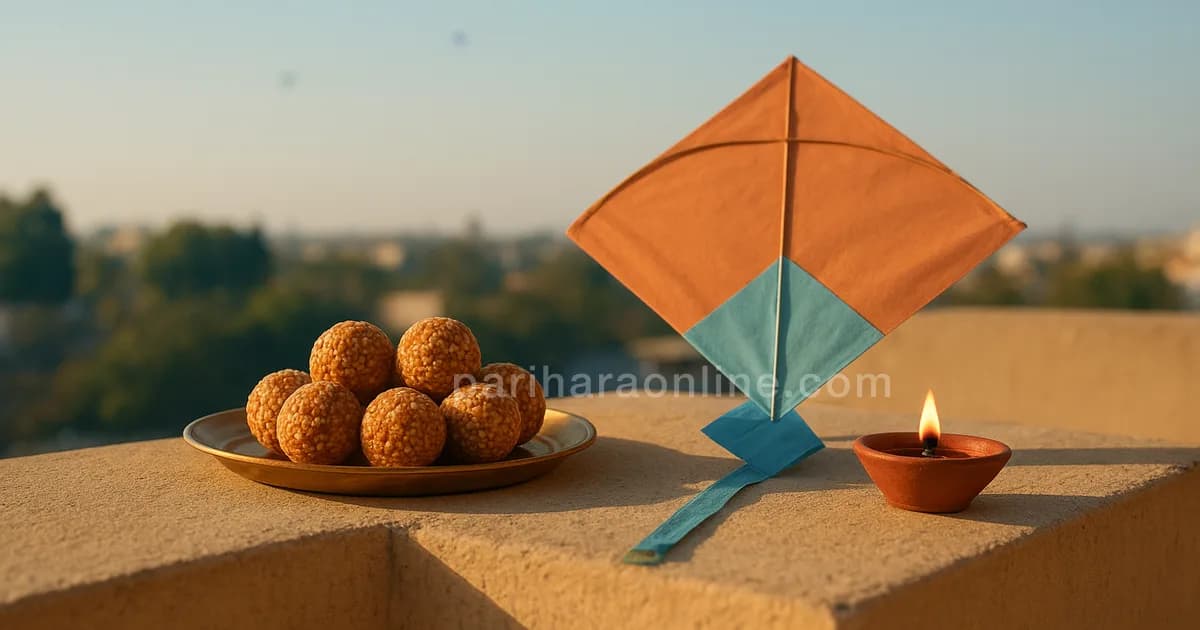
Look at the food with a winter body. Til, sesame, is rich and oily. Gur, jaggery, is dense and warming. Traditional medicine in India has long treated both as heating foods, good for cold months when skin dries and energy drops. So on Sankranti people make til laddoos, chikki, a brittle of jaggery and nuts or seeds, ellu bella in Karnataka, a mix of sesame, jaggery, peanuts and coconut, and give them away.
The giving matters as much as the eating. In Maharashtra, people hand each other sesame sweets and say "til gul ghya, god god bola": take this sesame and jaggery, and speak sweetly. It is a small reset for relationships at the turn of the season. Old quarrels are supposed to end with a sweet.
The early bath is the other practice. Many people take a dip in a river at dawn; huge crowds gather at the confluence at Prayagraj and on the Ganga. At home, the practice is simply an early wash before sunrise. Try it for a few days around Sankranti and notice how waking before the sun changes the whole day; waking early in brahma muhurta goes further into that.
Kites, sunlight and the body
In Gujarat and much of the north, the sky fills with kites. Whole families spend the day on rooftops, strings in hand, heads tilted back. It looks like a game, and it is. But notice what the body is doing. It is outdoors in winter sun for hours. The eyes are looking up and far away instead of down at a screen. The neck and shoulders are moving. People are shouting, laughing, calling to neighbours on other roofs.
Many people find this is exactly what the body wants in the middle of winter. Weeks of short days, heavy food and indoor time tend to leave us dull. The festival puts us in the sun and makes us look up. Whether you call it worship of Surya or simply getting outside, the effect is the same: lightness.
You do not need a rooftop or a kite. A walk in the morning sun works. So does opening the curtains and sitting in the light with your tea. If you have children, a simple way to share this is the same as with any festival: tell the story and let them do one thing with their hands; explaining Diwali to kids has ideas that work for Sankranti too.
Try this for the week of Sankranti
For the seven days around Sankranti, step into morning sunlight for ten minutes. No phone, no podcast. Just stand or walk in the light and let your eyes look far.
Each day, eat a little sesame and jaggery, a laddoo, a piece of chikki, a spoonful of the mix. Give some to someone else and say something kind. If you want to mark the main day with a pot of milk and rice, making Pongal in a US kitchen shows how. At the end of the week, notice how your body feels compared with the week before.
Questions people ask
What is the meaning of Makar Sankranti?
Sankranti means the sun's movement from one zodiac sign to the next. Makar Sankranti is when it enters Makara, Capricorn, around mid-January, beginning Uttarayana, the sun's six-month northward course. It is one of the few Hindu festivals fixed by the solar calendar, so its date barely moves. It is celebrated as Pongal, Lohri, Uttarayan and Bihu across India.
Why do we eat til and jaggery on Sankranti?
Sesame and jaggery are warming, energy-dense foods suited to the cold of mid-winter, and both appear in Ayurvedic winter diets. In Maharashtra people exchange til-gul saying 'til gul ghya, god god bola', take this sweet and speak sweetly. So the food carries two ideas: care for the body in winter and sweetness in relationships.
What is the significance of Uttarayan?
Uttarayana is the half of the year when the sun appears to move northward, from Makar Sankranti to around the summer solstice. Tradition treats it as auspicious; in the Mahabharata, Bhishma waits on his bed of arrows until Uttarayana begins before leaving his body. In Gujarat, Uttarayan is celebrated with kite flying across rooftops.
Enjoying this?
To get more Makar Sankranti posts like this, subscribe for free.
Written by
Writes about practice: attention, breath, the body, the lamp
Archana writes about ritual as something you do rather than something you believe: the lamp, the breath, the fast, the few quiet minutes before the day begins. Her pieces usually end with a small practice to try for a week and notice what changes.