Ashlesha Nakshatra (Ayilyam): The Serpent's Star
Ashlesha nakshatra, Ayilyam in Tamil: the Nagas and Budha, the coiled serpent, the Karkadeswarar temple, and how to hold the star without fear.
· 4 min read
In short
Ashlesha, Ayilyam in Tamil, is presided over by the Nagas with Budha (Mercury) as its ruling planet; its symbol is a coiled serpent.
Folk fears about Ayilyam are custom, not scripture; many astrologers read the whole chart instead of judging by one star.
The Karkadeswarar temple at Thirunthudevankudi is traditionally associated with Ashlesha nakshatra.
My aunt in Chennai, the one who reads the palangal, the weekly star forecasts, without fail, once went quiet on a call when she heard that a cousin's newborn was Ayilyam. Just a pause, a small "oh", and then she changed the subject. I have thought since about how much fear one star name can carry. Ashlesha nakshatra, Ayilyam in Tamil, is the serpent's star, and it deserves a kinder reading than it usually gets.
Ashlesha nakshatra: serpents, Mercury and the coil
Jyotish, Indian astrology, counts twenty-seven nakshatras, the birth stars the Moon passes through in a month, and each one has its gods and its adhipati, the planet that rules it. Ashlesha is watched over by the Nagas, the serpent beings of Indian tradition, and its adhipati is Budha, Mercury, the planet of intellect and speech. It is the last star of Kataka, the sign of the crab. Its name means the embrace, the one who clings.
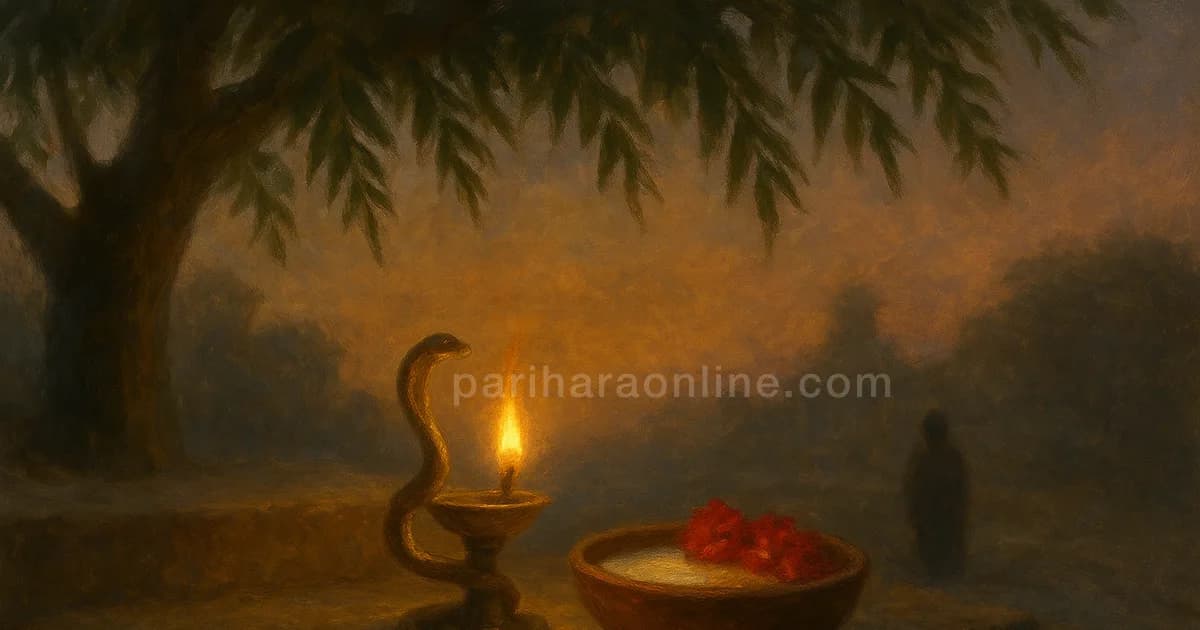
The symbol is a coiled serpent. A coil is energy at rest, strength held close rather than thrown about. In temple art, the serpent is not a villain: it is Adishesha on whom Vishnu sleeps, Vasuki around Shiva's neck, the kundalini coiled at the base of the spine in yogic imagery.
Tradition describes Ayilyam-born people as perceptive, persuasive, private and quick to read a room. It is a flattering portrait, if you think about it, and the star does not force it on anyone.
It comes after Pushya, the nourishing star.
Why do people fear Ayilyam, and should they?
The fear comes mostly from folk sayings, especially one that an Ayilyam bride brings trouble to her mother-in-law. You will hear it at weddings and in matchmaking calls. When I asked our family astrologer in Madurai about it years ago, he laughed and said these were customs, not rules, and that no classical text he knew made the claim in that form. Many astrologers say the same. The piece on how Vedic astrology differs from Western astrology touches on how much of what we hear is tradition and how much is folklore.
Serpents themselves are guardians in Tamil village life. Stone nagas sit under peepal trees at the edge of temple tanks, smeared with turmeric, garlanded, fed milk. Nobody fears them. People pray to them for children and protection. The festival of Naga Panchami is built on the same affection.
Appar, the Shaivite saint, wrote a hymn with a line I have always loved: "Naamaarkkum kudiyallom, namanai anjom". We are subject to no one; we do not fear death. He wrote it in defiance of a king. It works just as well against a star name said with a sigh.
The crab's temple and simple poojas
The temple the widely shared Tamil star list gives to Ashlesha is the Karkadeswarar temple at Thirunthudevankudi, near Kumbakonam, where a crab is said to have worshipped Shiva. The crab, karkata, is also the sign Kataka, so the temple is a fitting home for the sign's last star. My grandfather's shop was in Kumbakonam, and he used to say the whole district was one big temple with some houses in between.
The monthly observance is gentle. On the Ayilyam day each month, when the Moon returns to the star, many families offer milk at a Naga shrine or light a lamp at home. Some families who have been told of a Rahu-Ketu concern in the chart prefer a pooja at the Sri Kalahasti temple, which is known for exactly that. The yearly Ayilyam in the birth month, what we call the star birthday, is usually kept with a lamp and a quiet prayer, nothing grander. The next star, Magha, the ancestors' throne, is the first of Simha.
One small thing to carry into this week
The next time you hear a star named with a sigh, whether it is Ayilyam or Moolam or Kettai, say Appar's line in your head. Then ask the person about the child, not the star. What is her name? Is she sleeping? Who does she look like? My cousin's daughter is ten now, and my aunt adores her. The pause on that call was the only time the star ever came up.
Questions people ask
Is Ayilyam nakshatra bad for marriage?
There are folk sayings, especially about Ayilyam brides and mothers-in-law, but they are regional custom rather than scripture. Many astrologers set them aside and read the whole chart, including compatibility across several factors, rather than judging a person by one star. No star makes someone a burden to a family. Hold such sayings lightly and ask for a full reading.
Which temple is the Ayilyam nakshatra temple?
The widely cited Tamil list of nakshatra temples names the Karkadeswarar temple at Thirunthudevankudi, near Kumbakonam, as the Ayilyam nakshatra temple. Local legend says a crab worshipped Shiva here, which links it to Kataka, the crab rasi in which Ayilyam falls. Devotees often visit on their star day or arrange an archana from afar.
What are traditional Ashlesha nakshatra remedies?
Common Ashlesha nakshatra remedies in the tradition include offering milk or turmeric at a Naga shrine on the monthly star day, lighting a lamp to Shiva, chanting Budha's name on Wednesdays, and a Rahu-Ketu or sarpa pooja at temples such as Sri Kalahasti for families who wish. These are acts of devotion and reassurance, not fixes for a fate.
Enjoying this?
To get more Nakshatra posts like this, subscribe for free.
Written by
The Sunday column: festivals and rituals meeting ordinary weeks
Manikandan writes the Sunday column, where festivals and rituals meet commutes, hospital corridors and video calls with parents far away. Each piece closes with one small thing to carry into the week ahead.