Why Is Prasad Shared? The Meaning of Prasadam
Prasadam meaning, told through stories: why food offered to God returns as grace, why it is shared with everyone, and why it is never refused.
· 5 min read
In short
Prasadam is food or other offerings that have been offered to the deity and returned to devotees as grace; before offering it is called naivedyam.
Prasadam is shared with everyone equally because, in tradition, grace does not check status; that is why it is never refused.
A poor man once walked to Dwaraka carrying a handful of beaten rice wrapped in a torn cloth, a gift for his childhood friend, who was now a king. The friend was Krishna, and the story says he ate the rice with tears in his eyes. Why is prasad shared, and why is it never refused? Because in the tradition, food offered to God comes back as grace, and grace does not check who you are before it reaches you. The story sounds like it is about a miracle. It is really about what makes food sacred.
Prasadam meaning: from naivedyam to grace
The Bhagavata Purana tells the story of Sudama, as the poor friend is usually called. He was ashamed of his gift. Krishna's palace was full of gold; Sudama had only a little flattened rice, and he tried to hide it. Krishna found it, pulled it out of the cloth and ate a handful with delight, as if it were the finest thing in the world. When Sudama walked home, his hut had become a house.
People usually remember the house. But look at the rice. It was ordinary food, a poor household's breakfast. What changed it was the giving.
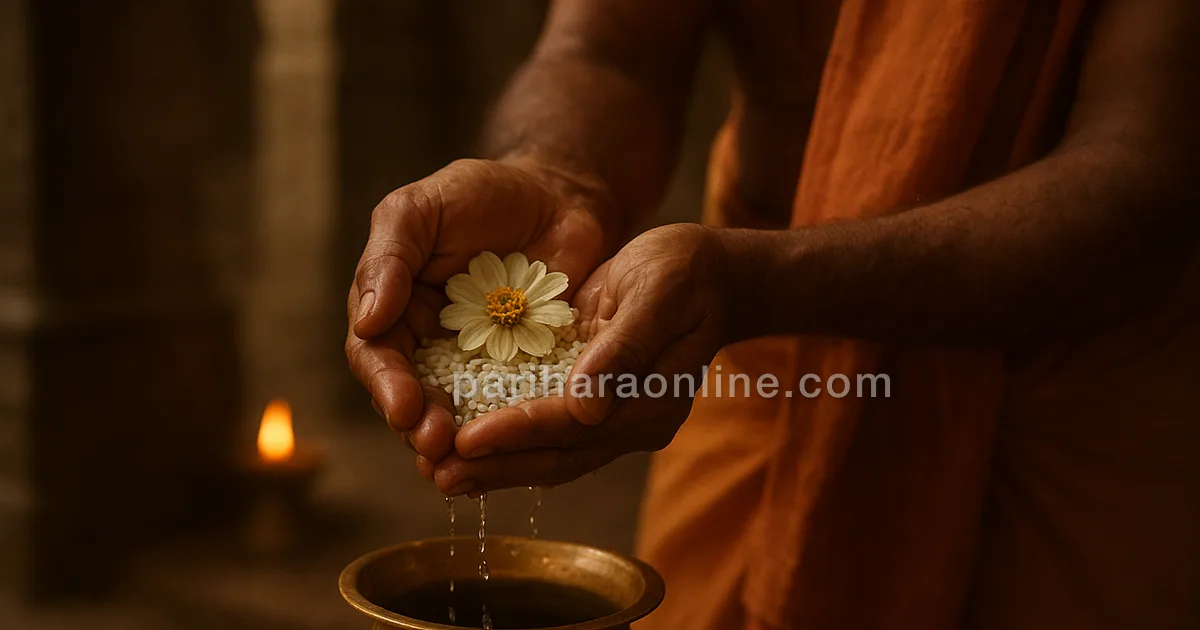
That is the distinction the tradition makes between two words. Naivedyam is the food offered to the deity during puja, prepared with special cleanliness and never tasted first. Prasadam, which simply means grace, is the same food after it has been offered. Nothing chemical happens to it. The rice is still rice. What changes is the relationship: you gave it, it was received, and now it comes back to you as a gift rather than something you own.
The Bhagavad Gita puts it in one plain line: whoever offers me, with devotion, a leaf, a flower, a fruit or water, that I accept. Patram pushpam phalam toyam. Four of the cheapest things in the world. The value was never in the offering.
Why is prasadam never refused?
If you have ever tried to wave away a laddu at a temple, you will know the look you get. The tradition is firm on this, and it can seem like mere etiquette. It is not about the calories.
To refuse prasadam is to refuse the relationship it stands for. Imagine Sudama's rice pushed back across the table: not because Krishna disliked beaten rice, but because it came from someone too poor to matter. The refusal would have been about Sudama, not about the food.
So when health or diet really does prevent you from eating it, the custom is gentle. Accept it with the right hand, touch it to your forehead, and quietly give it to someone else later or return it to nature. You receive the grace; you are not obliged to eat the sugar. There are practical suggestions for this in what to do with prasadam when it arrives.
Why is prasad shared with everyone?
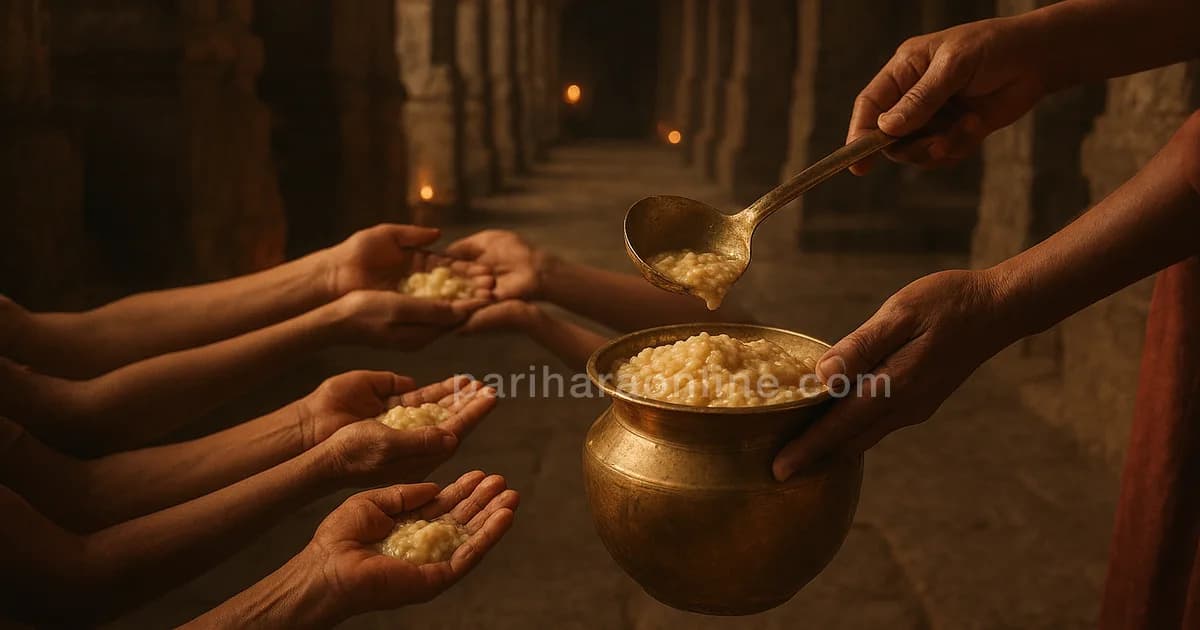
Stand in the queue at any large South Indian temple and watch the prasadam counter. The man in the silk veshti and the man who swept the steps that morning receive the same spoonful of pongal, from the same brass ladle, in the same leaf. At the Jagannath temple in Puri, the mahaprasad, the great offering, has long been eaten by pilgrims of every caste together from the same pots, a striking thing in a society that was otherwise so careful about who ate with whom.
That equality is the theology. If prasadam is grace, then it cannot be rationed by status, because grace was never earned by status in the first place. Sharing it is how the tradition keeps saying so, every single day, at the counter.
It is also why the custom of feeding people, annadhanam, the giving of food as worship, sits so close to temple life. And it is why even a packet posted across the ocean, as in prasadam delivery to the USA, is meant to be opened and shared out rather than kept whole on a shelf.
Every meal, in a small way
The story of Sudama does not end with the house. It ends with a man who went to ask for help and found he could not bring himself to ask. He had been received so fully that the request no longer mattered.
Perhaps that is the gentlest reframe the tradition offers. You do not need a temple for this. Any meal offered with a moment of thanks before eating becomes, in a small way, prasadam. It is the same food, but you receive it differently. There is more on that idea in prasad and gratitude, and the same logic of stating an intention before acting runs through the sankalpam that opens every puja. The offering can be tiny. It is the offering that turns rice into grace.
Questions people ask
What is prasad in Hinduism?
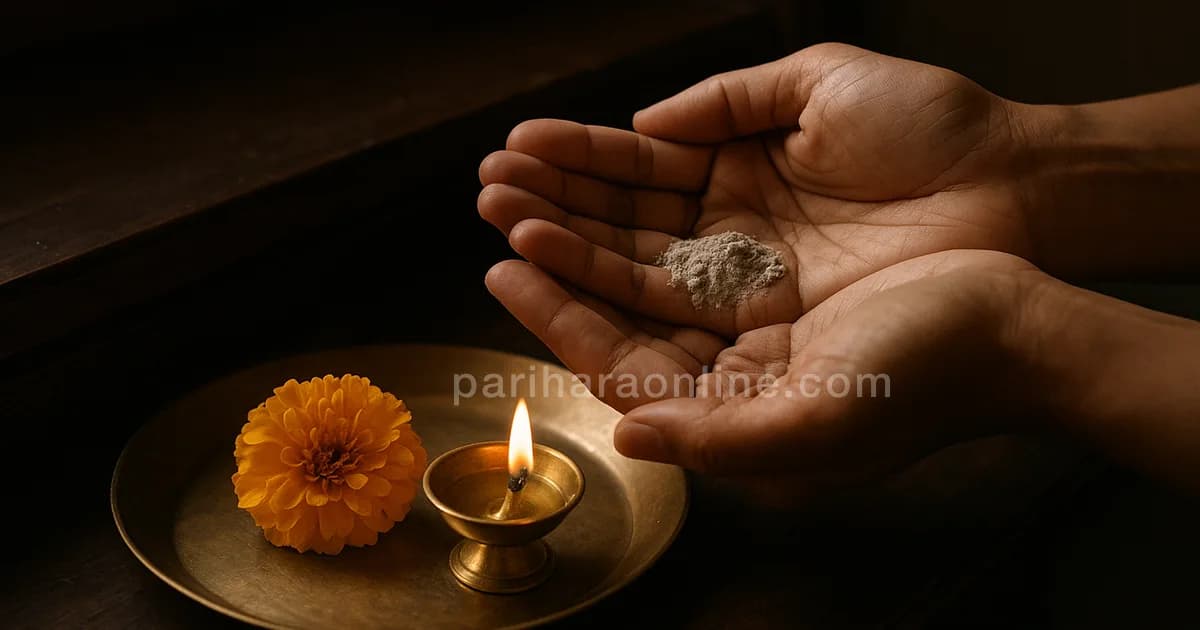
Prasad, or prasadam, means grace. It is food, flowers, ash or other items that are first offered to the deity during worship and then returned to devotees. Before the offering it is called naivedyam; after, it becomes prasadam. Eating it is understood as receiving the deity's blessing, which is why it is handled with care.
Why should you not refuse prasad?
In Hindu tradition, refusing prasadam is seen as refusing the blessing and the relationship it represents, not just the food. If you cannot eat it for health or dietary reasons, the respectful practice is to accept it with the right hand, touch it to your forehead, and quietly give it to someone else or return it to nature later.
What is the difference between prasad and naivedyam?
Naivedyam is the food offered to the deity during puja, usually prepared with special cleanliness and not tasted beforehand. Once offered, it is considered accepted and blessed, and becomes prasadam, which is then distributed. The food is the same; its meaning changes through the act of offering, which is the heart of the idea.
Enjoying this?
To get more Prasadam posts like this, subscribe for free.
Written by
Reads the old stories for what they still mean
Hariharan writes about the myths, symbols and festival stories that most of us grew up hearing but were rarely asked to think about. He tells the story first, then asks what it is really about, and leaves the conclusion to you.