Makara Rasi (Capricorn): Saturn, Work and Patience
Makara rasi explained: the sea-creature makara, Saturn as ruling planet, the slow walker's story, and the Thirunallar temple linked to the sign.
· 4 min read
In short
Makara rasi is the tenth sign in Jyotish, ruled by Shani (Saturn) and symbolised by the makara, a sea creature; rasi means the Moon sign.
Tradition describes Makara natives as hardworking, responsible and patient, with rigidity or pessimism as the shadow.
Thirunallar, the Shani temple, and Saturday sesame lamps are traditionally linked with Makara through its ruling planet.
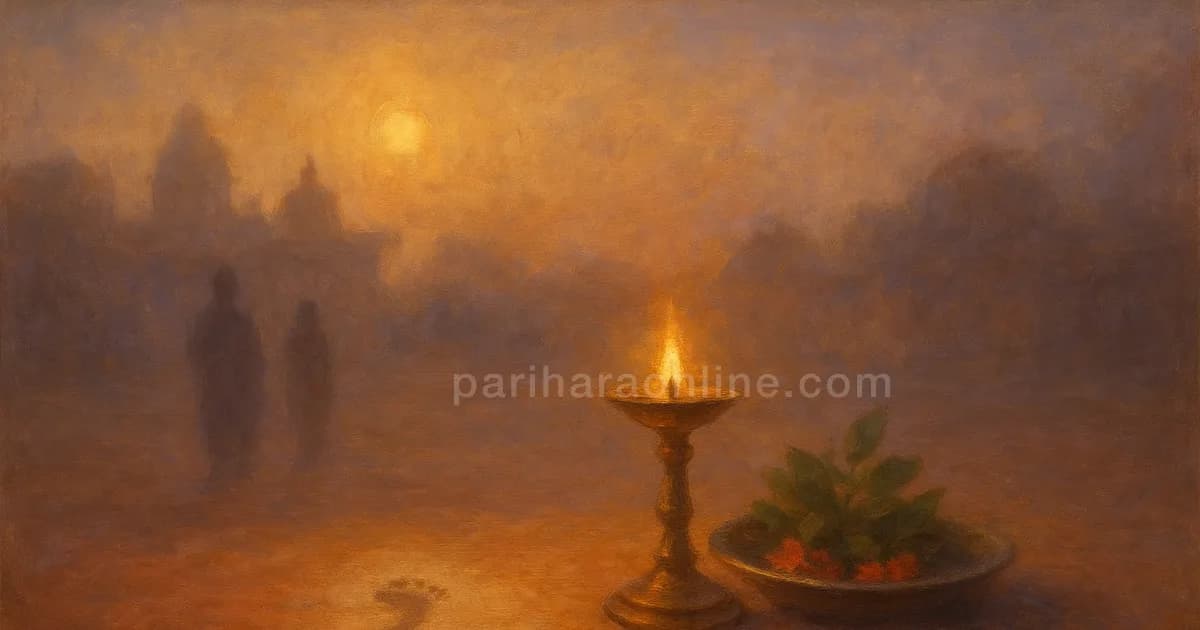
Shani, the story goes, walks with a limp, and that is why he is the slowest of the planets. The sign he rules, Makara, is the sign of work that takes as long as it takes. Makara rasi carries a reputation for heaviness, but its lesson is gentler than its reputation. It is about patience, and about the kind of justice that only patience can deliver.
What is Makara rasi, and what is a makara?
Makara rasi is the tenth sign. When a family astrologer speaks of your rasi, he means the sign the Moon was in at your birth. It holds the last three quarters of Uttara Ashadha, all of Shravana, the listener's star, and the first half of Dhanishta. Its ruling planet is Shani, Saturn. Its nearest Western cousin is Capricorn, a goat with a fish's tail, which is a remarkably similar idea arrived at in a different sky.
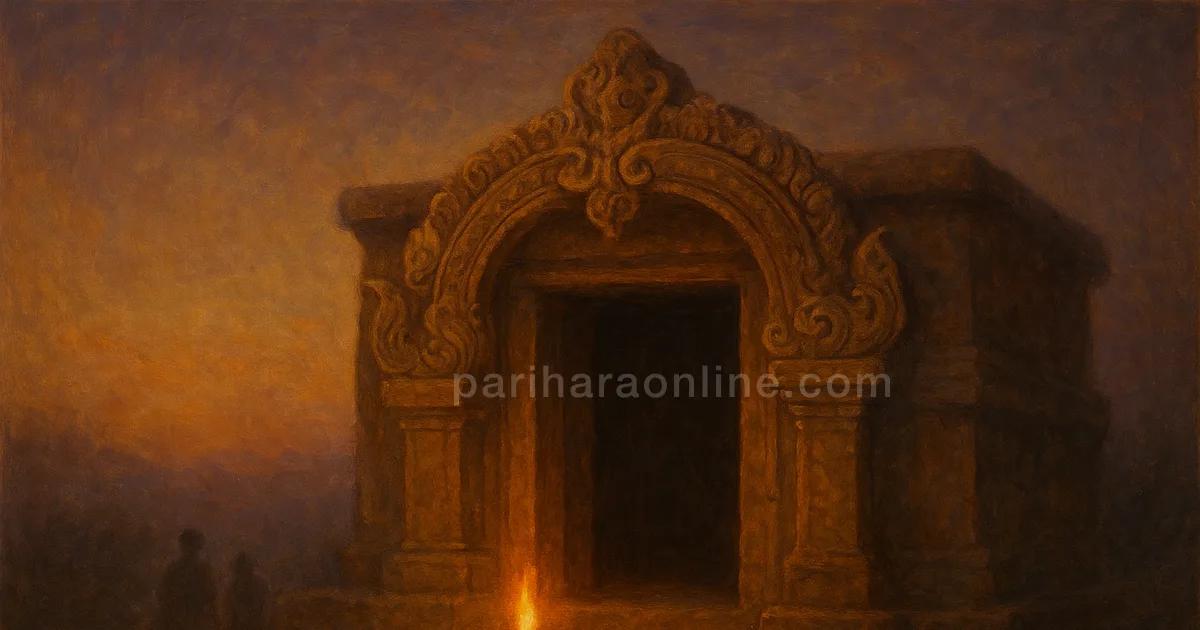
The makara itself is a creature that does not exist anywhere but in the Indian imagination: part crocodile, part fish, sometimes with an elephant's trunk. It is the mount of the river goddess Ganga. Look up next time you walk into a South Indian temple and you will likely see it: the makara thorana, the arch over the doorway, held in the jaws of two makaras at either end. The creature of the sign literally carries the door.
Why does Shani walk so slowly?
The Puranas tell several versions. In one of the best known, Shani is the son of Surya, the Sun, and Chhaya, whose name means "shadow". Chhaya was a stand-in for Surya's first wife, who could not bear his heat and left her shadow behind in her place. Shani grew up in a household where he was never quite the favoured son. In a quarrel within that household his leg was struck, and he has limped ever since, moving through the zodiac more slowly than any other planet, taking about two and a half years to cross a single sign.
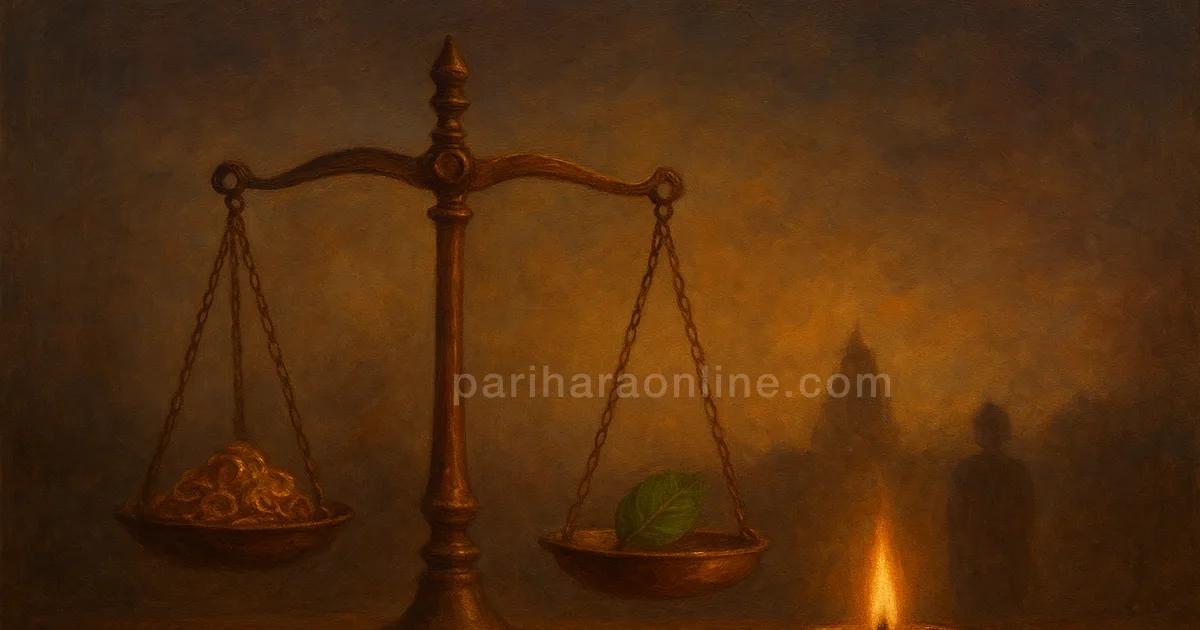
The story says Shani is slow because he was hurt. The story is really about patience as a kind of justice. A slow judge is a careful judge. Shani is feared as the planet of delays and difficulty, but the tradition also calls him the fairest of the grahas, the one who gives exactly what has been earned, neither more nor less, and gives it in its own time. The hurt child grew into the one who never rushes a verdict.
Makara people, in the tradition's picture, are hardworking, responsible, reserved and patient, the kind who build slowly and last. Taken too far, that becomes rigidity and pessimism, the patience that hardens into a conviction that nothing will ever change. A portrait, not a judgement; Shani of all planets would insist on the difference.
Saturdays, sesame oil and Shani's temples
Shani's great temple is Thirunallar, near Karaikal, the Saturn shrine of the Navagraha circuit. It is here, the story goes, that King Nala was freed from his long trial after years of wandering and loss. Pilgrims can read the guide to the Thirunallar Saniswaran temple before they go.
Saturday is Shani's day, and a sesame-oil lamp on Saturday evening is the traditional observance. Hanuman, who is said to be beyond Shani's reach, and Venkateswara, worshipped on Saturdays in many homes, are both natural companions for the sign; Hanuman's own day, Hanuman Jayanti, is a good one for Makara people to keep. And there is a festival built into the sign: Makara Sankranti, the day the Sun enters Makara in mid-January, which Tamil families keep as Pongal. For the wider picture of Shani's cycles, sade sati, explained without panic, is calm and clear.
One slow task
The makara in the temple arch carries the door on its back without complaint. It has been doing so for centuries. Nobody thanks it. The door simply stays up.
If your Moon is in Makara, pick one slow task this week and give it an hour a day. A language, a skill, a garden bed, a difficult conversation you have been putting off. Do not expect results by Friday. Shani never does. His other sign, Kumbha, the water-bearer, shows what that patience is finally for: pouring out what you have carried.
Questions people ask
Which god should Makara rasi people worship?
Because Shani rules Makara, many families light sesame oil lamps on Saturdays and pray to Hanuman or Venkateswara. Some visit Thirunallar, the Shani shrine among the Navagraha temples near Karaikal. Tradition sees Shani as the planet of discipline and fairness, so these prayers are offered as devotion and steadiness, not out of fear.
What are Makara rasi characteristics?
Tradition describes people with the Moon in Makara as disciplined, practical, hardworking, reserved and patient, often succeeding slowly and steadily, with rigidity, worry or pessimism as possible shadows. These Makara rasi characteristics come from Shani's rulership. They are traditional descriptions of the Moon sign rather than predictions; the full chart matters more.
Which temple is linked to Makaram rasi?
Makaram, the Tamil name for Makara, is traditionally linked with Thirunallar, near Karaikal, where Shani is worshipped among the Navagraha temples and King Nala is said to have ended his long ordeal. Many families also pray at Hanuman temples on Saturdays. These associations come through the ruling planet rather than a fixed canonical list.
Enjoying this?
To get more Rasi posts like this, subscribe for free.
Written by
Reads the old stories for what they still mean
Hariharan writes about the myths, symbols and festival stories that most of us grew up hearing but were rarely asked to think about. He tells the story first, then asks what it is really about, and leaves the conclusion to you.