Swayamvara Parvathi: The Goddess Who Chose
The Swayamvara Parvathi homam draws on the story of Parvati choosing Shiva. What the tale means, what the homam involves, and why it is sought for marriage.
· 4 min read

In short
The Swayamvara Parvathi homam takes its name from the story of Parvati, who chose Shiva as her husband and pursued that choice through tapas.
Tradition performs the homam for unmarried men and women seeking a suitable partner, using a mantra dedicated to Parvati as the bride who chose.
The story's lesson is steady intention and self-respect in the search, not passive waiting.
Parvati did not wait to be chosen. In the Shiva Purana, she chose Shiva, the one god who wanted nothing to do with marriage, and practised tapas, intense disciplined austerity, until the ascetic finally opened his eyes and noticed her. That is why the prayer carries the name Swayamvara Parvathi. A swayamvara is a bride's own choice of husband, and Swayamvara Parvathi is the Goddess as the bride who chose. The homam, a fire ritual in her name, is traditionally performed for people seeking a good partner, and its story is less about waiting and more about steady intention.
The story: Parvati's tapas and the wedding of Shiva
It begins with a loss. Sati, Shiva's first wife, gave up her life in the fire of her father Daksha's sacrifice after he insulted her husband. Shiva, grieving, withdrew into the mountains and into himself. He sat in meditation and would not come out.
Sati was reborn as Parvati, daughter of Himavan, the king of the mountains. From childhood, the story says, she knew whom she would marry. The gods knew too, and they had their own reasons to hurry things along: a demon named Taraka could only be killed by a son of Shiva, and Shiva was not interested in having one.
So the gods sent Kama, the god of desire, to shoot Shiva with his arrow of flowers while Parvati was nearby. Shiva opened his third eye and burned Kama to ash. The shortcut failed.
Parvati then did what the gods could not. She went into the forest and began her own tapas. She gave up comfort, then food, then even the fallen leaves she had been living on, which is why she is also called Aparna, the one who went without leaves. Kalidasa tells the same story, tenderly, in the Kumarasambhavam.
Finally a young ascetic came to her hermitage and mocked her choice. Why waste her youth on a wild, ash-smeared beggar who lives in cremation grounds? Parvati did not argue. She simply refused to hear it, and turned to leave. The young man was Shiva in disguise. He had come to test her, and she had passed. The wedding followed, and the whole world came to watch.
The story says Parvati won Shiva through penance. The story is really about steady intention. Desire alone, Kama's arrow, burned up at the first glance. What lasted was a choice held quietly, over time, through doubt and mockery.
What is the Swayamvara Parvathi homam?
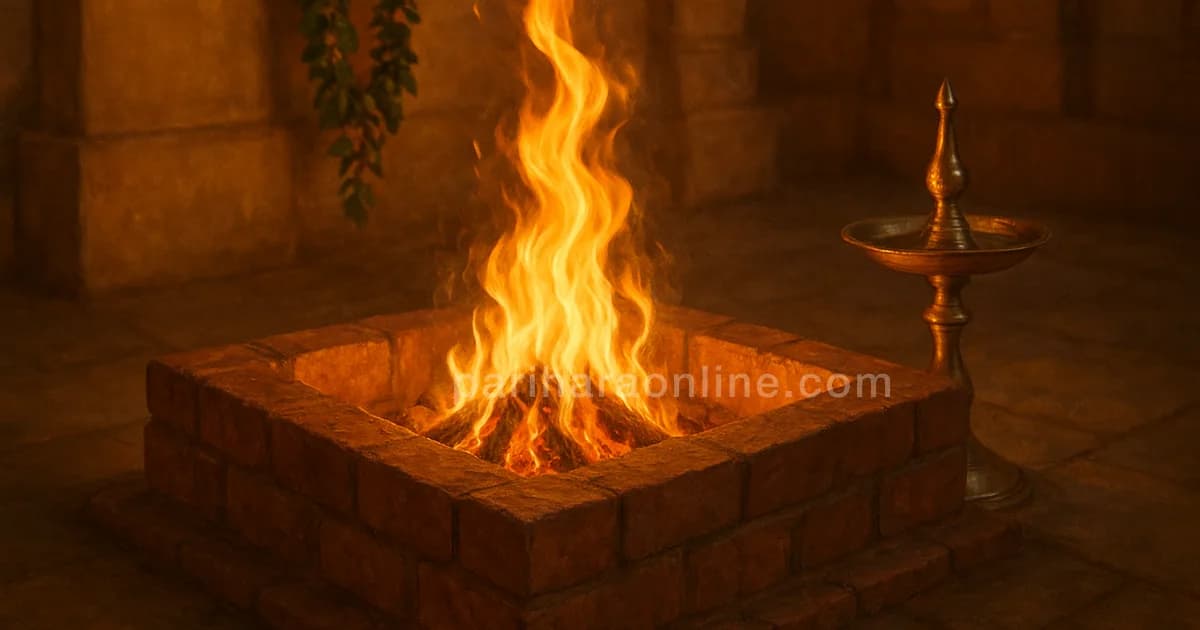
The Swayamvara Parvathi homam is a fire ritual centred on a mantra traditionally attributed to the Goddess herself, the prayer she is said to have used in her own search. The priest offers ghee and other offerings into the fire while the mantra is chanted, with the sankalpam, the spoken statement of intention, made in the name of the person seeking a partner. The basics of how any fire ritual works are laid out in what is a homam.
Who is it performed for? Traditionally, for unmarried people who want a suitable match, and particularly when the search has been long. Although the story is Parvati's, the homam is done for men and women alike; the prayer is for a good partnership, and that is not limited to brides. Many people also chant the mantra themselves at home, on Fridays or daily, as part of a steadier practice. There is more on that kind of practice in waiting for the right match, and a wider look at the options in delay in marriage remedies.
Why does choosing matter more than being chosen?
In a lot of marriage talk, the young person is passive: a profile, a horoscope, a photograph passed between families. The story of Swayamvara Parvathi quietly turns that around.
Parvati knows what she wants. She acts on it. She is patient, but she is not passive; tapas is hard work. She is clear enough about her choice that mockery does not move her. And she keeps her self-respect throughout. She never pleads.
Agency, patience and clarity: that is what the story asks of anyone looking for a partner. Know what you are actually looking for. Keep showing up. Do not let other people's opinions, or frightening chart labels like kala sarpa dosha, talk you out of your own judgement.
A prayer for clarity
Here is the gentle reframe. The Swayamvara Parvathi prayer is not only a request for someone to arrive. It is also a request for the clarity to recognise the right person when they do, and the steadiness to wait for them without losing yourself. Parvati's reward was a marriage, and their wedding night is still remembered, in some tellings, on Maha Shivaratri. But what she built along the way was herself.
Questions people ask
What is the story behind Swayamvara Parvathi?
In the Shiva Purana and Kalidasa's Kumarasambhavam, Parvati, reborn after Sati, resolves to marry Shiva, who is lost in meditation. When attempts to rouse him fail, she undertakes intense tapas. Moved by her resolve, Shiva tests her and then accepts. Swayamvara means one's own choice, so the name honours Parvati as the one who chose.
What are the benefits of the Swayamvara Parvathi mantra?
Tradition holds that chanting the Swayamvara Parvathi mantra invokes the Goddess's blessing for finding a compatible partner and removing obstacles to marriage. Devotees often chant it daily for a set period. It is best understood as prayer that steadies intention and hope, not as a promise of a wedding within a particular time.
Can men also do Swayamvara Parvathi homam?
Yes. Although the story centres on Parvati, the homam is traditionally performed for both unmarried women and men seeking a good life partner. The sankalpam, the spoken statement of intention, carries the person's name and birth star, and priests can perform it on their behalf if they cannot attend in person.
Enjoying this?
To get more Parvati posts like this, subscribe for free.
Written by
Reads the old stories for what they still mean
Hariharan writes about the myths, symbols and festival stories that most of us grew up hearing but were rarely asked to think about. He tells the story first, then asks what it is really about, and leaves the conclusion to you.