Explaining Diwali to Kids: Stories That Stick
Explaining Diwali to kids with stories they remember: Rama's homecoming, Lakshmi's visit, Krishna and Narakasura, plus the one idea underneath all of them.
· 4 min read
In short
The easiest way of explaining Diwali to kids is through its stories, such as Rama's return home, followed by the one idea they share: light chases away darkness.
Children remember Diwali best by doing: lighting a lamp, drawing rangoli and giving sweets to a neighbour.
My niece, who was seven, once asked why we light oil lamps on Diwali when we have perfectly good electricity. It is a fair question, and the answer is a story. The simplest way of explaining Diwali to kids is to tell them one of its stories, Rama coming home, Krishna defeating a demon, Lakshmi visiting clean houses, and then give them the one idea all those stories share: when it is darkest, we make light for each other. Every Diwali story is really the same story told differently.
The stories behind Diwali, told for children
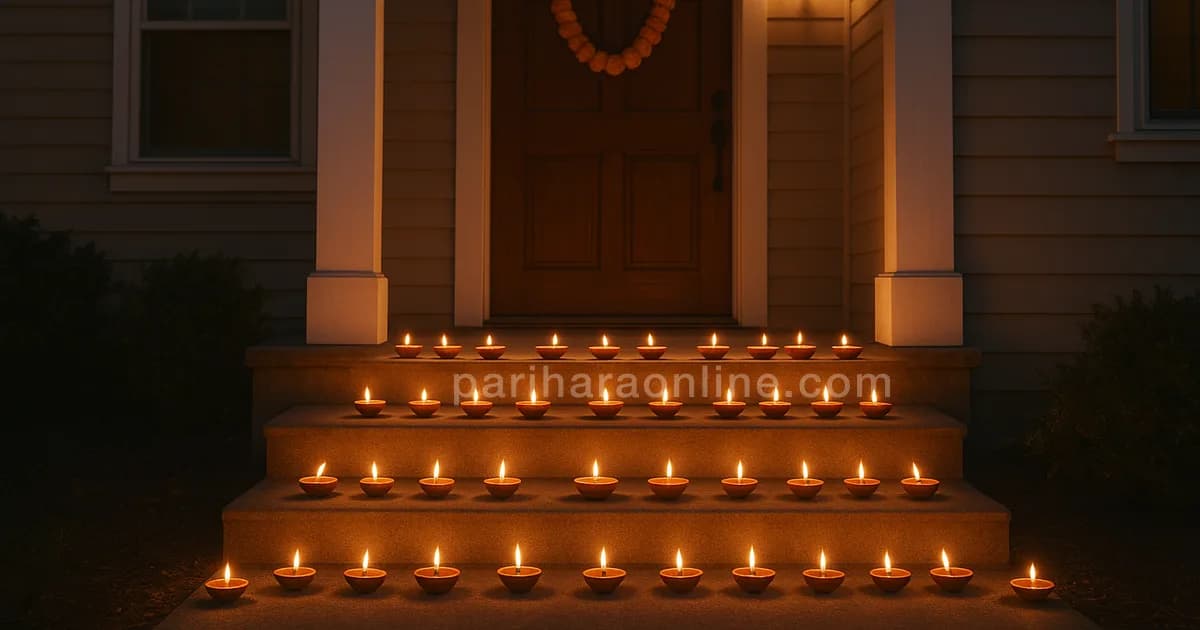
Rama comes home. In the Ramayana of Valmiki, Prince Rama is sent to live in the forest for fourteen years, with his wife Sita and his brother Lakshmana. Sita is carried away by Ravana, the ten-headed king of Lanka, and Rama, with the help of Hanuman and an army of monkeys and bears, brings her back. Then they go home to Ayodhya. In the popular telling, the night they return is a dark new-moon night, and the people of the city fill every window and wall with lamps so the travellers can find their way. For children, this is the best story: a long journey, a rescue, and a whole city saying welcome home.
Krishna and Narakasura. In the Bhagavata Purana, a demon king called Narakasura has stolen treasures from the gods and locked up thousands of people. Krishna and his wife Satyabhama fight him and set the prisoners free. In much of South India, the day before the new moon is kept as Naraka Chaturdashi, with an early-morning oil bath and firecrackers at dawn; there is more on that in the Naraka Chaturdashi oil bath.
Lakshmi visits. Lakshmi is the goddess of wellbeing and good fortune. The Puranas tell how she rose out of the ocean of milk when the gods and demons churned it together. On Diwali night, families clean their homes and light lamps at the door so that she will feel welcome. Children like this one because it gives the cleaning a reason.
Why are there so many Diwali stories?
Sooner or later, a child notices that the stories do not match. Was it Rama or Krishna? Is it about coming home or winning a fight?
Tell them the truth: India is enormous, and different regions tell different stories on the same night. In Karnataka and Maharashtra, the day after the new moon remembers the generous king Mahabali. Jains remember Mahavira, and Sikhs remember Guru Hargobind's release from prison. Nobody is wrong. It is one festival, and many people have hung their best story on it.
Children are better at this than adults. They hold several stories at once without needing to choose, the way they know that both grandmothers make the best dosa. If you want to go further, the same approach works for the whole year of festivals; how the Hindu festival calendar works in the USA explains why the dates move, which is often the next question.
Explaining Diwali to kids through doing
Stories are remembered, but hands remember more. On the evening itself:
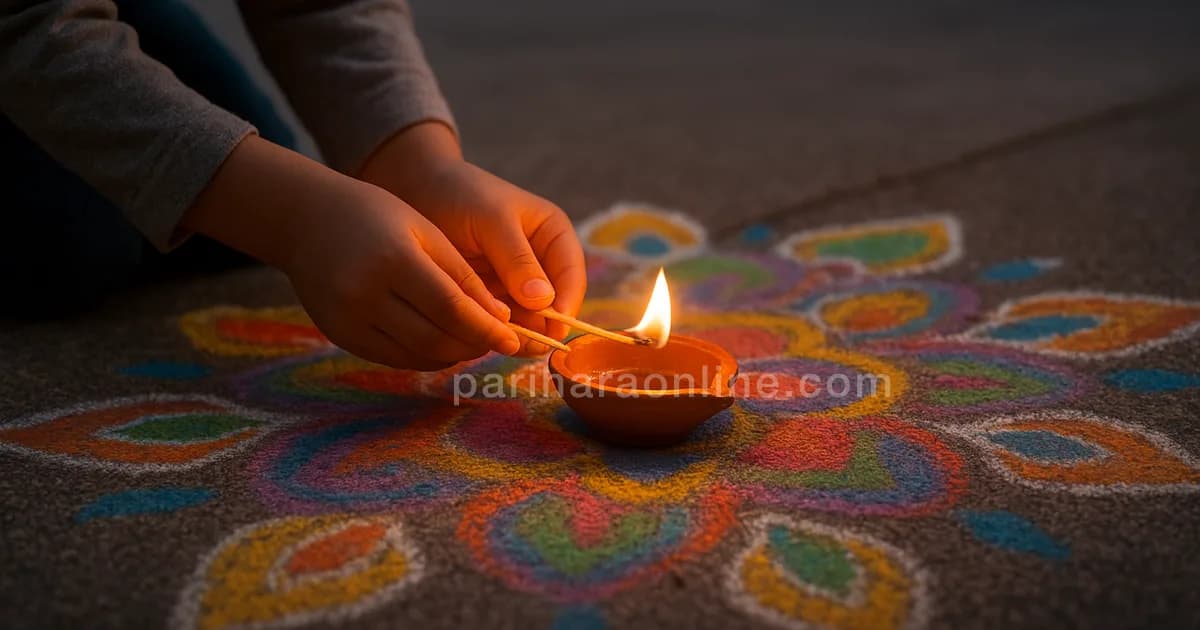
- Let them light a lamp. A diya, the small clay oil lamp, with an adult close by. Give them one of their own to look after.
- Draw a rangoli. Coloured chalk on the driveway is perfect. Rangoli, the patterns drawn at the doorway, welcome guests; there is a fuller explanation in the meaning of kolam and rangoli.
- Carry sweets to a neighbour. Let the child ring the bell and explain, in their own words, what Diwali is.
If you are asked to speak to your child's class, keep it to five minutes, bring a diya and tell the Rama story. More ideas for letting children own a ritual are in festival rituals for kids, and how to celebrate Diwali in the USA on a weekday covers the rest of the family evening.
Give them the idea, not just the plot
Back to my niece and the electricity. What I eventually said was this: the lamps are not for seeing. The lamps are for saying something. When Rama came home in the dark, the people did not have to light lamps; he could probably have found the way. They lit them because they wanted him to know he was expected.
That is what a child can carry, long after the names of demons are forgotten. The plot changes from region to region. The idea does not. When someone is in the dark, you make a light for them. Tell the story, then light the lamp together, and let the lamp do the explaining.
Questions people ask
What is the Diwali story for kids?
A child-friendly version: Prince Rama, his wife Sita and brother Lakshmana were sent to live in the forest for fourteen years. Sita was taken by the demon king Ravana, and Rama rescued her. When they finally came home to Ayodhya on a dark new-moon night, the people lit rows of lamps to welcome them. We light lamps to remember that welcome.
How do I explain Diwali to my child's class in America?
Keep it to five minutes. Say Diwali is the Hindu festival of lights, show a clay diya, tell Rama's homecoming in a few sentences, and explain that families clean their homes, light lamps, wear new clothes and share sweets. Let children draw a rangoli pattern with chalk or coloured paper. Teachers usually welcome a sweet to share.
Why do we light diyas on Diwali, in simple words?
We light diyas to welcome good things and to show that even a small light beats darkness. In the stories, people lit lamps to welcome Rama home, and families light them to invite Lakshmi, the goddess of wellbeing. For children, it helps to add that each lamp can be a wish or a thank-you.
Enjoying this?
To get more Diwali posts like this, subscribe for free.
Written by
Reads the old stories for what they still mean
Hariharan writes about the myths, symbols and festival stories that most of us grew up hearing but were rarely asked to think about. He tells the story first, then asks what it is really about, and leaves the conclusion to you.