How to Celebrate Navratri in the USA
How to celebrate Navratri in the USA with a job and a commute: a lamp for nine nights, simple fasting, and Golu, garba or the temple on weekends.
· 4 min read
In short
To celebrate Navratri in the USA on busy weeknights, light a lamp each evening and honour one form of the Goddess in ten quiet minutes.
Save community celebrations, garba, Golu visits and temple programmes for the weekends; tradition has always adapted to how people live.
Nine nights sounds impossible between school runs and quarterly reviews, until you realise each night only asks for ten quiet minutes and a lamp. That is the honest answer to how to celebrate Navratri in the USA with a job and a commute: light a lamp each evening, honour one form of the Goddess, and save the big gatherings, the garba, the Golu visits, the temple programmes, for the weekends. Navratri begins on the first day of the bright half of the autumn month of Ashvin, the day after the new moon, usually in late September or October; check a panchangam set to your city for the first night.
How to celebrate Navratri in the USA on a weeknight
My first autumn in America, I tried to do everything my mother did in Chennai. By the fourth night I was exhausted, behind at work, and faintly resentful of the Goddess, which is not the point of the festival at all.
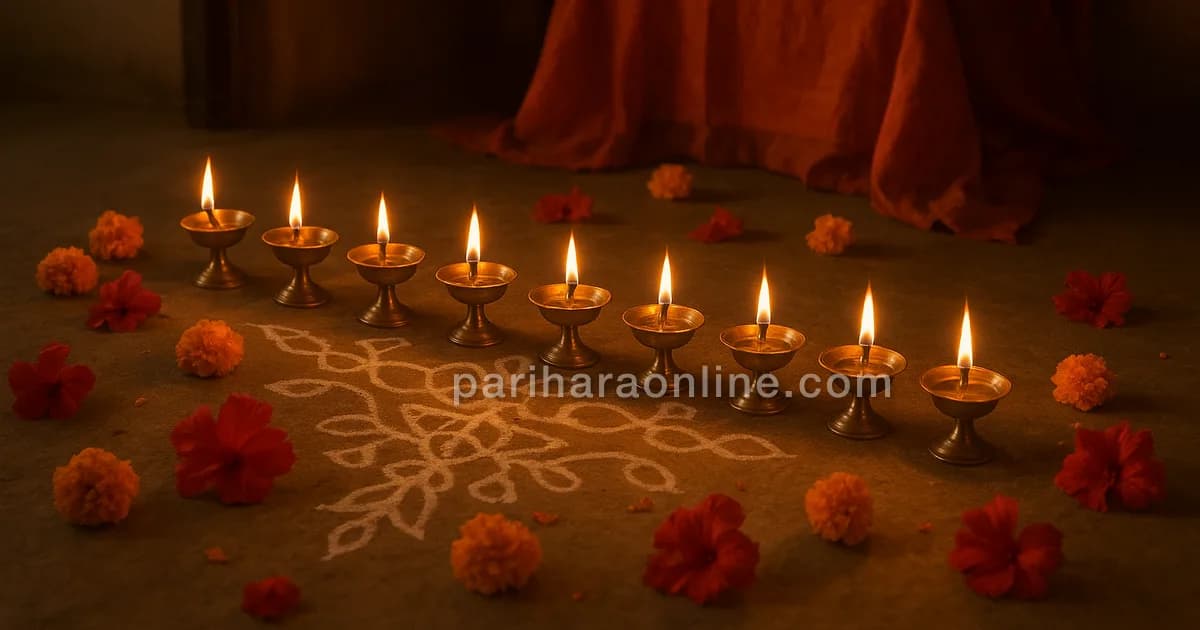
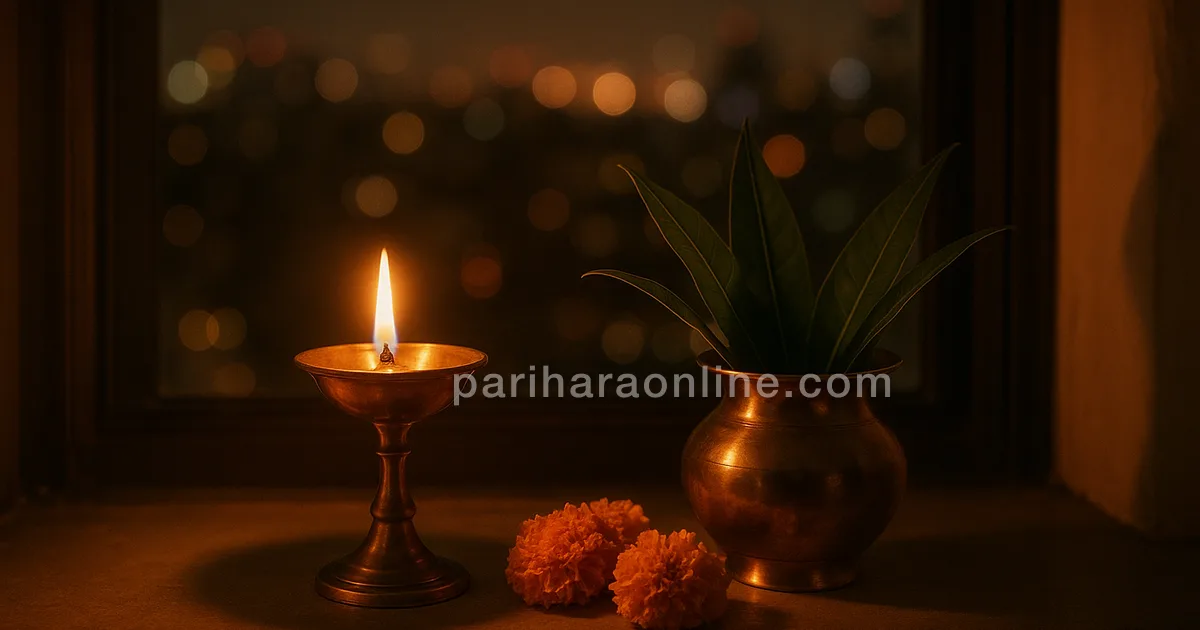
What I do now is much smaller. A picture of Durga on a shelf, a lamp, a flower, and one name each evening. Some families place a kalash, a pot of water topped with mango leaves and a coconut, on the first night and keep it for all nine. The nine forms of the Goddess, from Shailaputri, the daughter of the mountain, on the first night to Siddhidatri, the giver of accomplishment, on the ninth, give each evening its own focus. If you want the story of why there are nine, it is told in why Navratri lasts nine nights.
The routine takes ten minutes: come home, wash, light the lamp, offer the flower, say the name, sit for a minute. Om Dum Durgayai Namah, a salutation to Durga, is a simple chant if you want one. The Devi Mahatmyam, the text at the heart of Navratri, has a refrain that I say on the night I am most tired: to the Goddess who dwells in all beings as strength, salutations, again and again. There is a gentle introduction to reading it in Durga Saptashati for beginners.
Weekends are for community
Navratri in America has a public face that is, if anything, bigger than it is in many Indian cities. Temples hold evening programmes, Gujarati associations book whole convention centres for garba and dandiya, the circle dances with sticks and clapping, and university student groups run their own nights. Most are open to everyone. There is a thoughtful piece on what garba's circle means if you want to understand what you are dancing.
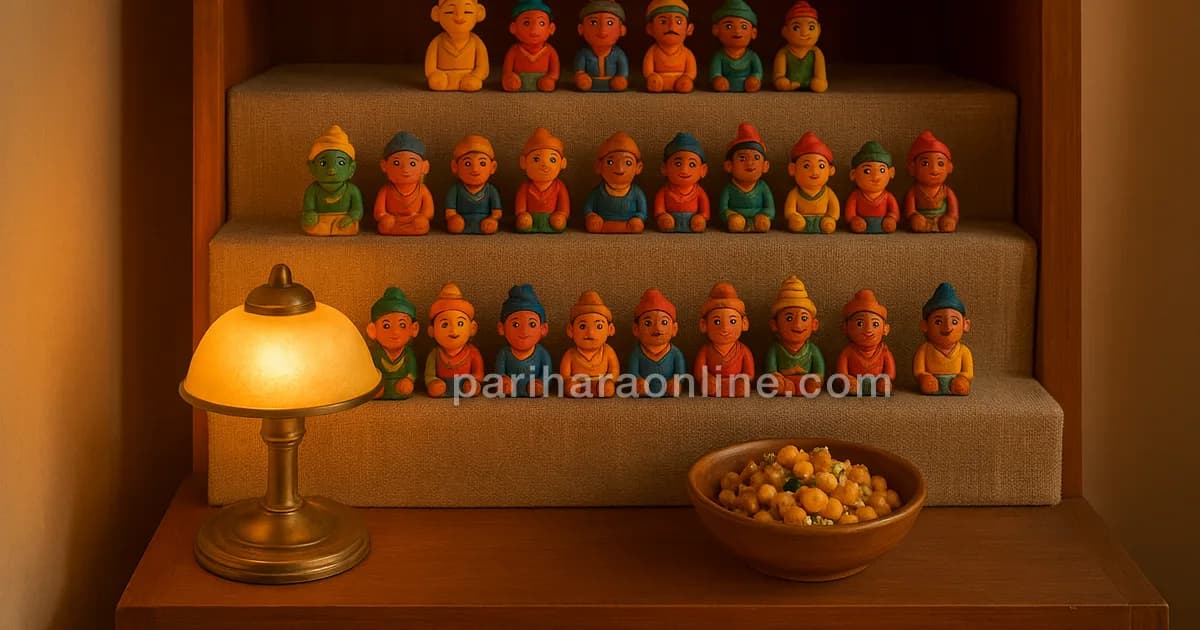
For South Indian families, weekends are for Golu, the display of dolls on steps, and for visiting other families' Golus with a small gift and a song. You do not need a big house; the story of setting up Golu in a small apartment shows how three bookshelf steps work perfectly well.
Towards the end come Ayudha Pooja, when tools, books and instruments are honoured, and Vijayadashami, the day of victory. If either falls on a weekday, protect that one evening. Leave on time. The meaning of Ayudha Pooja and why we bless our tools makes a lovely conversation with children, who will want to place their laptops and school bags before the lamp.
Is it okay to adapt the fasting and rituals?
Yes. I want to say that clearly, because many of us carry a quiet guilt about doing less than our parents did.
Keep what anchors you. For most people, that is the evening lamp and the name of the Goddess. Scale down what strains you. A full fast on a day of back-to-back meetings is not devotion; it is a headache. Many people keep one simple meal, or a sattvic diet without onion, garlic or meat, for the nine days. Others fast only on the eighth or ninth day. There is more practical detail in Navratri fasting rules, with room to adjust.
Tradition has always adapted to how people live. My grandmother kept Navratri around the rice harvest. We keep it around the commute. The Goddess, in every story I have read, is more interested in the sincerity than the schedule.
One small thing to carry into the week
Keep a notebook by the lamp. Each night, after the minute of sitting, write one line. What you noticed, who you prayed for, what the day was like. Nothing long.
By the tenth day, Vijayadashami, you will have nine lines. Read them together. Mine, one year, went from "too tired to think" to "called Amma, she laughed for the first time in weeks." It was not a dramatic transformation. But it was a story, and I would not have noticed it without the lamp and the notebook.
Questions people ask
How can I celebrate Navratri at home in the USA?
Set up a small altar with a picture of Durga, a lamp and flowers. Each evening, light the lamp, offer a flower or fruit, and chant a simple name such as Om Dum Durgayai Namah. Some families place a kalash on the first day. Many keep a partial fast, and gather with friends for garba or Golu on the weekends.
Can I do Navratri puja while working full time?
Yes. Navratri's core is the evening prayer, which fits after work. Ten minutes with a lamp, a flower and a name of the Goddess keeps the nine nights meaningful. Take your fasting practice down to one meal or a sattvic diet if a full fast affects your work. Plan larger rituals, such as Ayudha Pooja, for an evening you can protect.
How do I find garba events in the USA?
Most large US metro areas have garba and dandiya nights organised by temples, Gujarati associations and university student groups, usually across the Navratri weekends. Check your nearest temple's calendar, local community Facebook and WhatsApp groups, and event ticketing sites. Many are open to everyone, including friends new to the dance.
Enjoying this?
To get more Navratri posts like this, subscribe for free.
Written by
The Sunday column: festivals and rituals meeting ordinary weeks
Manikandan writes the Sunday column, where festivals and rituals meet commutes, hospital corridors and video calls with parents far away. Each piece closes with one small thing to carry into the week ahead.