Purva Phalguni (Pooram) Nakshatra: Rest and Delight
Purva Phalguni nakshatra, Pooram in Tamil: Bhaga and Shukra, the front legs of a bed, the Thiruvarangulam temple, and a week of real rest to try.
· 4 min read
In short
Purva Phalguni, Pooram in Tamil, is presided over by Bhaga, god of one's share of delight, with Shukra as its ruling planet.
Its symbol, the front legs of a bed, points to rest, pleasure and union, which is why tradition links Pooram with marriage.
The Hari Theertheswarar temple at Thiruvarangulam is traditionally associated with Purva Phalguni nakshatra.
Purva phalguni nakshatra, called Pooram in Tamil, has a bed for its symbol and a god of delight for its deity. That makes it the one star in the sky that asks you to rest on purpose. Most people treat rest as what happens when the work runs out. This star treats it as a practice.
Purva Phalguni nakshatra: Bhaga, Venus and the bed
Among the twenty-seven nakshatras of Jyotish, Indian astrology's birth stars, each has a god who presides and a planet, the adhipati, who rules. Pooram's god is Bhaga, one of the Adityas, the solar gods of the Vedas; his name means share or portion, and he is the one who gives each person their share of good fortune and delight. Its adhipati is Shukra, Venus, the planet of pleasure, beauty and relationship. The star lies wholly in Simha, the lion.
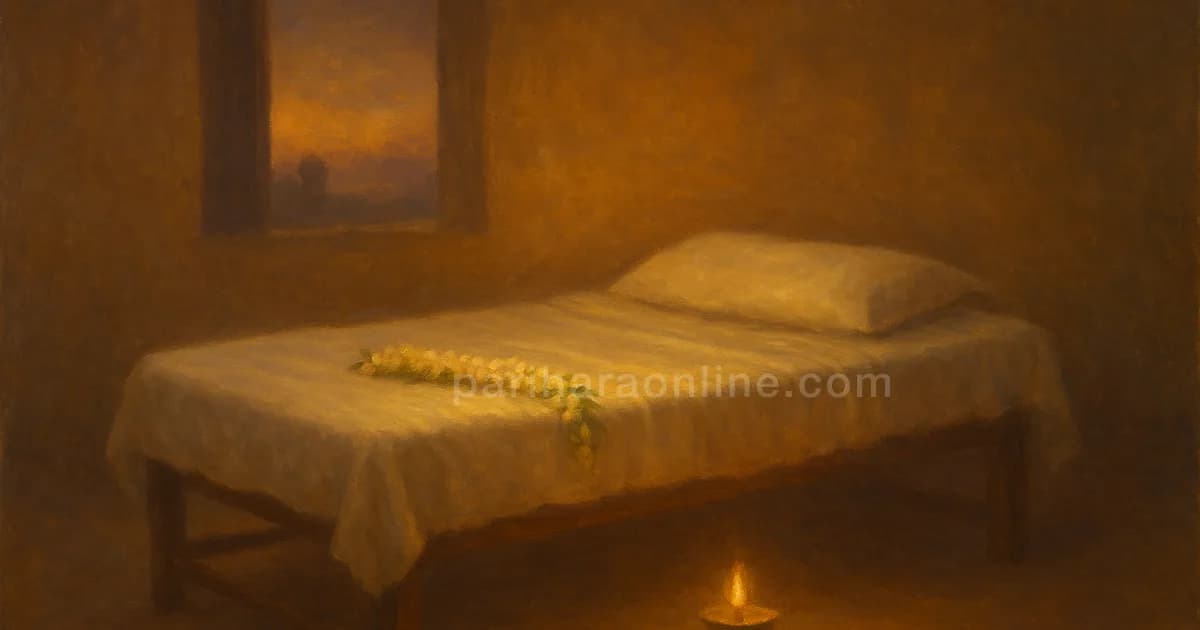
Its symbol is the front legs of a bed, or a hammock swinging between two posts. Rest, pleasure, union, recovery: all the things that happen when you finally lie down.
Pooram-born people, the tradition says, are warm, generous, artistic, affectionate and fond of comfort. They are said to enjoy life and to be good company. Offer that to yourself as tradition, not fate. If you were born under this star and you are a workaholic, you are not doing it wrong. You may simply have the most to learn from it.
It follows Magha, the ancestors' star. After the throne, the bed. The order is not an accident.
Is rest a spiritual practice?
In the Vedic hymns, Bhaga is invoked as the one who apportions joy. Not wealth only, not success only, but the share of sweetness that belongs to a human life. The idea is striking: delight is not a reward you earn after enough effort. It is a portion that is already yours, and a god is assigned to hand it out.
This is partly why tradition links Pooram with marriage and union. In Tamil tradition, Andal, the girl-saint of Srivilliputhur who sang her way into marriage with Vishnu, was born on Pooram in the month of Aadi, and Aadi Pooram is still celebrated as her day. Andal's story and what it means tells it in full. Families waiting for a marriage often keep Swayamvara Parvathi prayers, which recall Parvati's own long wait for Shiva; that story is told in the Swayamvara Parvathi story.
But underneath the stories is something simpler, about the body. The body needs recovery before it can offer anything. Muscles repair during rest, not during work. Attention returns after sleep, not after the fourth coffee. Every practice you care about, whether it is prayer, study or parenting, runs on a body that has been allowed to stop.
Thiruvarangulam, Fridays and an unhurried star day
The temple matched to Pooram in the Tamil star lists is the Hari Theertheswarar temple at Thiruvarangulam, near Pudukkottai. An archana, flowers offered with the deity's names, can be asked for there or at a Shiva or Devi temple nearby.
Because Shukra rules the star, Friday suits it. A lamp on Friday evening for Lakshmi or Parvati is the most common observance; Friday Lakshmi pooja walks through it. On the monthly Pooram day, your janma nakshatra, try keeping the evening quieter than usual: an early dinner, a lamp, no work email after dark.
When Pooram returns in your birth month, make that star birthday a day of rest rather than a day of obligations. The next star, Uttara Phalguni, the star of promises, takes up the other half of the bed.
Thirty minutes earlier to bed
Go to bed thirty minutes earlier than usual, without a screen. Read something on paper, or lie in the dark and let the day settle. Notice how long it takes the body to actually slow down. For many people it is longer than they expected.
Then, on your Pooram day, do one thing only for the pleasure of it. Not to improve yourself, not to post it, not to be productive. Sing, walk, cook something you like, sit in the sun.
Notice whether you feel guilty, and why. The guilt is information. Bhaga does not ask you to earn your share. He only asks you to receive it.
Questions people ask
Which temple is the Pooram nakshatra temple?
The widely cited Tamil list of nakshatra temples names the Hari Theertheswarar temple at Thiruvarangulam, near Pudukkottai, as the Pooram nakshatra temple. Pooram-born devotees often visit on their monthly star day or on Fridays, since Shukra rules the star. Arranging archana from afar is a common alternative for those who live outside Tamil Nadu.
Is Pooram star good for marriage?
Tradition links Pooram with love, pleasure and union because of its bed symbol and Shukra as ruling planet, so families often ask about it when matching horoscopes. Andal, who sang of marrying Ranganatha, is remembered in Tamil tradition as born on Aadi Pooram. Compatibility in Jyotish still depends on the full charts of both people, not one star.
Who is the deity of Purva Phalguni nakshatra?
The deity of Purva Phalguni is Bhaga, one of the Adityas in the Vedas, whose name means one's share or portion of good fortune and delight. Bhaga is invoked at weddings in the Rig Veda. Shukra, the planet of beauty and pleasure, rules the star, and Parvati and Lakshmi are commonly worshipped by Pooram-born devotees.
Enjoying this?
To get more Nakshatra posts like this, subscribe for free.
Written by
Writes about practice: attention, breath, the body, the lamp
Archana writes about ritual as something you do rather than something you believe: the lamp, the breath, the fast, the few quiet minutes before the day begins. Her pieces usually end with a small practice to try for a week and notice what changes.