Ekadashi Fasting Rules for Beginners
Ekadashi fasting rules for beginners: what to eat and avoid, how strict to be, how to break the fast, and how to adapt the tradition to your health and routine.
· 4 min read
In short
Ekadashi falls on the eleventh day of each lunar fortnight; the core rule in most traditions is to avoid grains and beans.
Fasts range from waterless to fruit-and-milk only; beginners usually start with a grain-free or one-meal fast.
Break the fast the next morning with light food, and skip strict fasting if you are pregnant, unwell or on medication without medical advice.
Twice a month, on the eleventh day of each lunar fortnight, the tradition asks you to eat less and notice more. The basic Ekadashi fasting rules are these: no grains or beans for the day, a light meal the evening before, a fast at whatever level your body can manage, and a gentle breaking of the fast the next morning. Everything else is detail, and families differ on the detail. Here is how to start sensibly, and how to adapt it without turning it into a test of endurance.
Ekadashi fasting rules
Ekadashi means "the eleventh". It falls on the eleventh tithi, or lunar day, of both the waxing and the waning fortnight, so roughly twice a month. The tradition, especially among devotees of Vishnu, treats it as a day to set the body aside a little and turn attention towards prayer.
The central rule is simple: no grains and no beans. That means no rice, wheat, lentils, dal, or anything made from them. The Puranas explain this with a story that sin takes shelter in grain on this day; you do not have to believe that to notice that grains are what most of us eat without thinking.
Beyond that, there are levels of fast:
- Nirjala: no food and no water, from sunrise until the next morning. Very strict, traditionally kept by a few on special Ekadashis. Not for beginners, and not for anyone with health concerns.
- Jala: water only.
- Phalahar: fruit, milk and a few permitted foods through the day. This is the most common.
- Ekabhukta: one grain-free meal, usually at midday.
The evening before, on Dashami, the tenth day, eat an early, light meal. It makes the fast much easier. Heavy food the night before means a hard morning.
What can I eat on an Ekadashi fast?
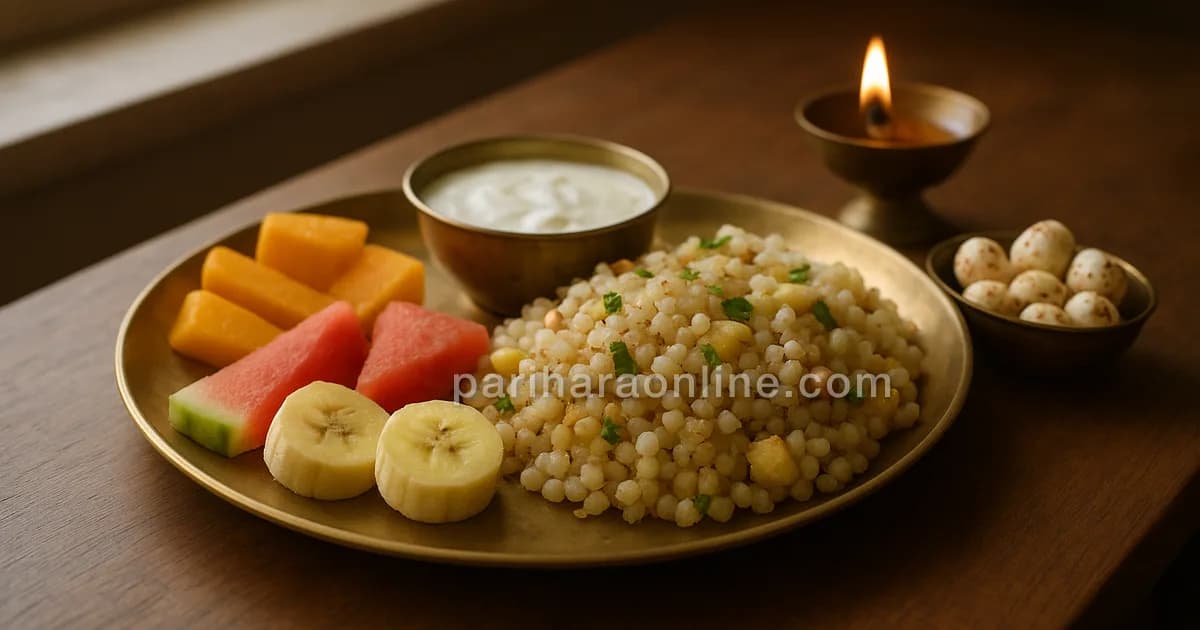
If you are keeping phalahar or one meal, the usual list is:
- Fruit of all kinds, fresh or dried.
- Milk, curd, buttermilk, paneer and ghee.
- Nuts and seeds.
- Root vegetables such as potato, sweet potato, colocasia and yam.
- Sabudana, the small pearls made from tapioca, as khichdi or vada.
- Buckwheat and water-chestnut flour in north Indian homes.
- Rock salt in place of ordinary table salt.
Families differ, sometimes a lot. Some avoid all vegetables except potatoes. Some allow tomatoes, others do not. Some avoid onion and garlic, which many already skip on Ekadashi. Some keep coffee; some give it up. If you grew up with a particular list, keep it. If you did not, start with fruit, milk and nuts, and see how you feel.
Breaking the fast well
The fast is broken the next morning, on Dwadashi, the twelfth day, at a time called parana. The panchangam, the traditional almanac, gives a window for it, usually after sunrise and before a set hour. Check the timing for your own city; in the United States it can differ from India by a day.
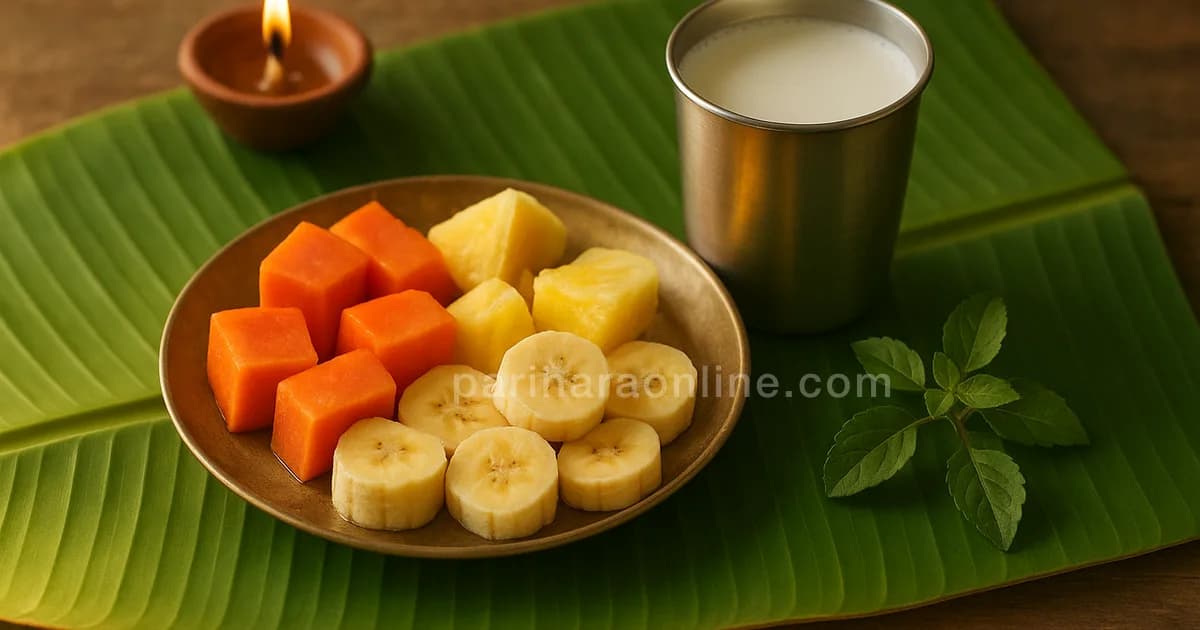
Break it gently. The body has been resting; do not throw a heavy breakfast at it. Many families start with a little water, then a few leaves of tulsi, the holy basil sacred to Vishnu, or a piece of fruit, then a simple meal with rice and something warm. Eat slowly. Stop before you are full.
Listen to the body afterwards. If you felt weak, dizzy or irritable, the fast may have been too strict. Adjust next time.
Who should not fast: children, the elderly, pregnant or breastfeeding women, people with diabetes, low blood pressure, eating disorders or other health conditions, and anyone on medication that needs food. Talk to your doctor before starting. The tradition has always made exceptions; for them, avoiding grains while eating normally otherwise is a perfectly good Ekadashi.
If your working day makes fasting hard, fasting with a desk job has practical ideas. Some families mark a day like this with a longer prayer, such as Satyanarayan puja at home, and the most important Ekadashi of the year is explained in the significance of Vaikunta Ekadashi.
Try one Ekadashi and take notes
On the next Ekadashi, try a simple grain-free day: fruit, milk and nuts, one proper meal if you need it, plenty of water. Eat lightly the night before and break the fast gently the next morning.
Keep a short note. Your energy at eleven in the morning and at four in the afternoon. Your mood. Your sleep. Whether you thought about food constantly or only now and then. Next time, adjust: stricter if it was easy, gentler if it was hard. Fasting and focus explores what many people find when they keep this up for a few months.
Questions people ask
What can I eat on an Ekadashi fast?
Most traditions avoid rice, wheat and other grains, as well as beans and lentils. Commonly allowed foods include fruit, milk, curd, nuts, potatoes, sweet potatoes, sabudana and rock salt. Some families avoid onion and garlic too. Rules vary by region and lineage, so it helps to follow your family's custom or start with a simple grain-free day.
How do I break an Ekadashi fast?
The fast is traditionally broken on the next morning, Dwadashi, within a window called parana, which your local panchangam lists. Many start with water, a tulsi leaf or fruit, then have a light meal of rice and simple dishes. Avoid heavy, oily food immediately. Breaking it with gratitude is considered part of the practice.
Can I drink water on Ekadashi?
Yes, unless you choose a nirjala, or waterless, fast, which is the strictest form and usually kept only on special Ekadashis by experienced fasters. Most people drink water, and many take milk or fruit juice. If you have health conditions, stay hydrated and consult a doctor before attempting a strict fast.
Enjoying this?
To get more Ekadashi posts like this, subscribe for free.
Written by
Writes about practice: attention, breath, the body, the lamp
Archana writes about ritual as something you do rather than something you believe: the lamp, the breath, the fast, the few quiet minutes before the day begins. Her pieces usually end with a small practice to try for a week and notice what changes.