Shirdi Sai Baba's Udi: Ash, Faith and Sharing
Shirdi Sai Baba udi is the sacred ash from his dhuni fire: what it means, how devotees use it at home, and why sharing it matters for families abroad.
· 4 min read
In short
Shirdi Sai Baba udi is the sacred ash from the dhuni fire he kept burning at Shirdi, given to devotees as a blessing.
Devotees apply a pinch to the forehead, mix a little in water or keep it in the shrine, as faith rather than medicine.
Udi is meant to be shared, which makes it an easy blessing to send across oceans.
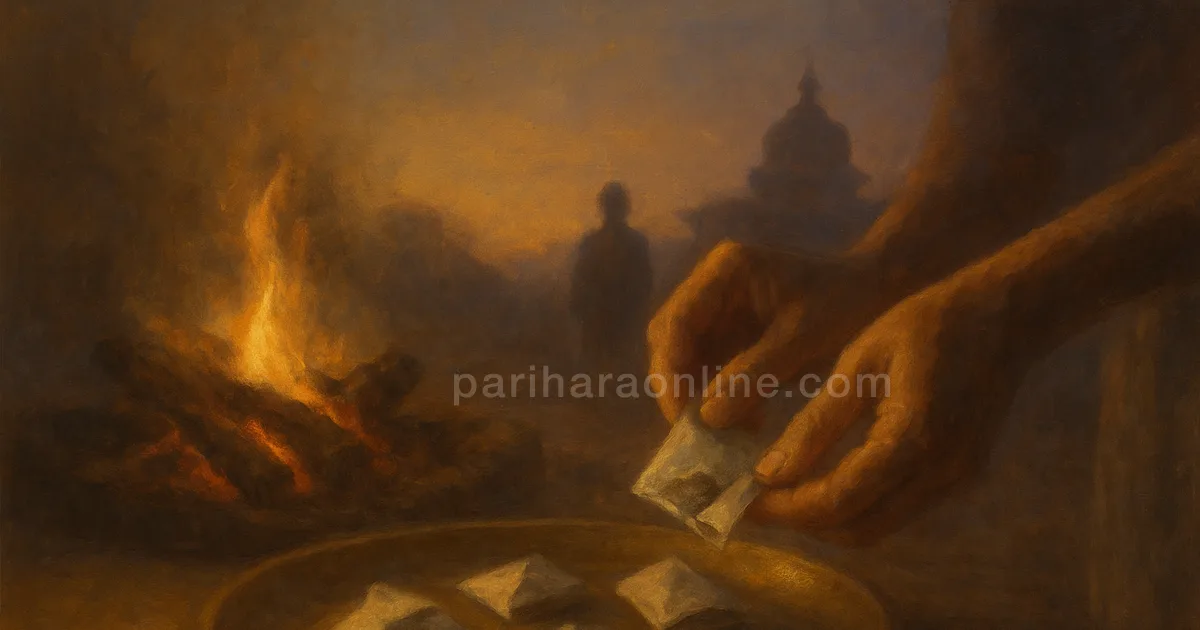
A small paper packet of grey ash arrived in our New Jersey mailbox once, folded inside a letter from a family friend. My son, who was about eight then, held it up to the light and asked why anyone would post ash across the world. It was a good question. The answer is that Shirdi Sai Baba udi is not just any ash. It comes from a fire that has been kept burning for a very long time, and it was always meant to travel.
What is Shirdi Sai Baba udi?
Udi is the ash of the dhuni, the sacred fire Sai Baba kept burning in the Dwarkamai, the old mosque at Shirdi where he lived. He fed that fire with wood every day, sat beside it, and gave its ash to whoever came to see him, freely, often without being asked. Hindu and Muslim visitors alike went home with a pinch of it. The fire is still tended at Shirdi, and the udi given to devotees still comes from it.
Ash is an odd thing to give as a blessing, until you think about what it is. Everything that was put into the fire, the wood, the offerings, the prayers said beside it, has burned down to this. Hindu homes know the idea already from vibhuti, the sacred ash worn on the forehead (the marks themselves are explained in vibhuti, kumkum and the tilak). Udi carries the same meaning with one saint's fire behind it.
How to use Sai Baba udi at home
The customs are simple, and families differ. A pinch on the forehead after a bath or before leaving the house. A little stirred into a glass of water and sipped, with a short prayer. A packet kept in the home shrine, in a wallet, in the glove box of the car. My wife keeps one in the drawer by the front door, next to the keys, which I think is exactly where Baba would have put it.
The Shri Sai Satcharita, the book of his life written by a devotee who knew him, is full of stories of udi given to the anxious, the grieving and the ill. Devotees read those stories as faith, and they are precious as faith. They are not medicine, and nobody who loved Baba would ask you to skip the doctor for them. In our house, when my father was going in for his heart surgery in Chennai, the udi went into his bag alongside the reports and the insurance papers. Both mattered. Neither replaced the other.
Many families keep Thursday as Sai Baba's day; Thursday worship of Sai Baba and the guru explains why.
Why does Baba's ash have to be shared?
Udi is a lesson in two things at once. The first is impermanence. Whatever we build, earn or worry about will eventually be ash, and Baba sat beside his fire every day as if to keep reminding people of that without saying a word.
The second is giving. What remains after the fire is what we pass on. Baba did not keep the udi in a locked box. He handed it out. That is why it is natural to divide a packet and send some on: to parents, to a friend going through a hard time, to a colleague in hospital. Why prasadam is shared makes the same point about blessed food. A blessing kept to yourself is only half received.
It also travels well. Ash does not spoil, it weighs almost nothing, and it fits in an envelope, which is why so many of us first met it in the post. If you are wondering whether prasadam can reach you in the US, prasadam delivery to the USA covers what arrives and how.
One small thing this week
My son did eventually get his answer. We divided the packet into three: one for our shrine, one posted to a friend in Ohio whose mother was unwell, and one he kept in his school bag. He did not ask about it again, but I noticed it was still there at the end of the year.
One small thing to carry into this week: if a packet of udi reaches you, divide it. Send some to someone who could use a reminder that they are remembered. The ash came a long way to you. Let it go a little further.
Questions people ask
How do I use Sai Baba udi at home?
Most devotees apply a small pinch of udi to the forehead after a prayer, sometimes with the name Sai or a short line from the Sai Satcharita. Some mix a pinch into a glass of water and drink it, and many keep a packet in the home shrine, a wallet or the car. Treat it with respect and store it dry.
What is the meaning of Sai Baba's dhuni?
The dhuni is the sacred fire Sai Baba kept burning in the Dwarkamai, the old mosque where he lived in Shirdi. He fed it wood and gave its ash, called udi, to those who came to him. Devotees read the fire as a reminder that everything is eventually reduced to ash, and that what matters is what we give.
Can udi prasad be sent to the USA?
Udi is simply ash in a sealed packet, and many families receive it by post from relatives in India; postal rules vary, so check before sending. PariharaOnline also sends Shirdi udi prasadam to devotees abroad. When it arrives, keep it in a clean, dry place near your shrine, and share some with family members or friends who would value it.
Enjoying this?
To get more Temple Guides posts like this, subscribe for free.
Written by
The Sunday column: festivals and rituals meeting ordinary weeks
Manikandan writes the Sunday column, where festivals and rituals meet commutes, hospital corridors and video calls with parents far away. Each piece closes with one small thing to carry into the week ahead.